Just Us Too is a blog about justice for other species: we promote the idea that people should be fair to the rest of the animals with whom we share the planet. When we get down to it, this is simply about recognising that other animals matter in and of themselves. Long ago before we invented agriculture and settled societies, the animals in the world were all free. That is much less so now, particularly for most of the animals we farm for food, and of course our impact on nature is often harmful to wild animals as well.
Luckily there is an ethical philosopy that can help us here – veganism. Veganism is the idea that we be fair to other animals and do what we can, when we can, to prevent treating them unjustly. I think we can summarise this as:
“Veganism recognises the inherent value and dignity of other species and aims to treat them fairly by our choices whenever we can. It has just three aims – to keep animals free, prevent their unfair use, and protect them from unnecessary cruelty, to the extent we can do that.”
I know that veganism has a pretty tainted reputation, but I believe that the ethical principles of veganism represent the most rational and effective way to be fair to other animals. If you think that other animals matter and that maybe we can do more for them, please read on below.
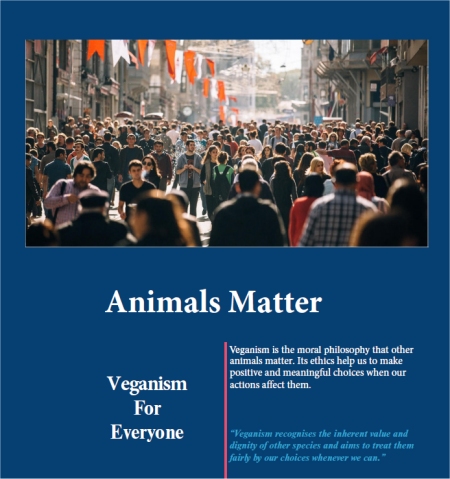
You can also download my short booklet, Animals Matter. This booklet explains quickly and simply what veganism is, why it’s worthwhile and tackles some typical criticisms. Please feel free to share.
A recent surge in anti-vegan rhetoric may be contributing to an observed fall in popularity for veganism (though see here for a different perspective). While many critics might hail this as a win, we must be honest and regard that as a failure for both our human moral agency and animal justice. The more vegan ethics are rejected by everyday consumers, the worse our treatment of animals becomes.
At the heart of this critical outbreak appears to be two unrelated concerns – that veganism on average causes far more harm to other animals than otherwise and the problem of “toxic” vegans.
Let’s tackle these and see why neither is a knockdown for veganism itself and why critics are deluding themselves into believing that they are doing good when they are in fact bad faith actors. I’ll go further and suggest they are not honourable.
The first claim – that vegans are causing more harm to other animals – is a pretty odd claim. After all, veganism is committed to doing what we can to be fair to other animals, so by its very nature you’d imagine the ethics guide us to avoid using and harming other animals whenever we can. But there are critics who think otherwise.
Why?
Well, usually critics are really only making one claim – that more animals are killed to eat a vegan‐friendly plants‐only diet than an everyday diet. If – so the story goes – if you want to cause the most harm to animals then be a vegan and expect crops to be grown to feed you and see just how many wild animals are killed for your food. We’ve all seen the rant from John Dutton (played by Kevin Costner) in Yellowstone and repeated on the Joe Rogan show. What we should be doing is eating grass‐fed beef, where just one animal is killed for our food each year. Seems legit. Except… it’s not. In reality, nearly everyone is not doing that at all.
What’s really happening is that far more animals are harmed and killed for an everyday consumer’s lifestyle than for a vegan lifestyle. And that’s exactly what we’d expect to find, given what vegan principles set out to achieve. Of course, vegan principles are not directly trying to achieve “least harm”, but that IS the consequence more often than not. A vegan lifestyle will typically lead to far fewer animals being harmed than happens for most consumers’ lifestyles.
What about “toxic vegans”? To be honest, this is a very weak argument. I agree, some vegans can often be very unpleasant folk in online discussions and comments, but my observation is that they are hardly alone. A quick look through the comments on any Tash Peterson post on Facebook will illustrate that. But is that good enough reason to reject the value of veganism as a way to tackle animal injustice?
After all, if animals matter to you, vegan ethics offers the single best tool for making fairer and kinder choices when our actions affect other animals. In fact, so effective and comprehensive is vegan ethics that I suggest it would not be possible to form any other ethical framework that addresses animal injustice that would not itself either be identical to, or a form of, the vegan framework. So when someone says they reject veganism because some people are unpleasant, you know right away they aren’t serious in their concern for other animals either.
So where are we? Clearly, modern use of animals comes with a cost to the animals themselves, so wanting to do what we can when we can to mitigate that cost must be a good thing. Yet critics want us to believe that doing so is actually a bad thing (doing good is bad, they say); worse they seem to be saying we should feel free to use animals however we want. That just isn’t how ethics work and I suggest that critics who encourage everyone to ignore the value of vegan ethics are acting dishonourably.
Put another way, when folk profess concern for other animals yet reject vegan ethics, you know they aren’t serious. No, if they really cared, they’d adopt the ethics themselves and encourage people to apply them responsibly.
Bottom line is this. If you think animals matter enough to want to be fair to them in your actions and choices, then vegan principles are the best tool you have. Whether or not you choose to be a vegan, the closer you get to living vegan, the more you’ll be doing to tackle injustice to other animals.
Shouldn’t we all want that?
*************************************************
Don’t forget, no-one needs to be a vegan to adopt and apply vegan ethical principles in their daily lives to make a positive difference for other animals. If you’d like to know more, you can read my essay that offers a deeper dive into the meaning and application of vegan ethics at the link below:
Many vegan advocates claim that animals are not here for us but rather exist for their own ends, and of course they are right. While this is an obvious truth, the implication being drawn is that it is deeply immoral for humans to ever use an animal for any purpose at all, even when it is a critical benefit for us.
I don’t agree. Animals are, like all physical objects that we can utilise, available for our use. We use and always have used animals, but in the distant past this was part of a natural and almost egalitarian balance with nature. This changed with the development of agriculture and as a consequence, veganism is for the most part a modern response to the inharmonious and unjust manner in which we use animals today.
In a nutshell, veganism rejects our unfair and exploitative use of animals in our modern world and asks that when we can, we keep them free and protected from our unfair use. Animals can be resources, but vegan principles place moral constraint on that use. We “can” (are able to) use animals, while veganism directs that we “may” (are morally constrained to) use them only in particular contexts driven by necessity.
Full version:
“Veganism is essentially a doctrine of freedom” (Leslie Cross, 1954).
While veganism – in the very early days – was largely a practice-based philosophy by which vegans ate a wholly plant-sourced diet, it wasn’t long before the focus turned to broader questions of animal use and exploitation. After Donald Watson (widely regarded as the “inventor” of veganism) left the Vegan Society in 1948, the influential Leslie Cross became a pivotal figure in the Society.
Cross was an emancipationist. In 1950, he was instrumental in developing the first complete definition of veganism as the “doctrine that man should live without exploiting animals” and drafted a Constitution which described the object of the Society as “…to end the exploitation of animals by man”. In other writings, Cross regarded veganism as a principle in its own right: “that man has no right to exploit creatures for his own ends — and no variation occurs”.
However, underlying this goal of ending animal exploitation was the belief that only by setting domesticated animals free to return to nature would we properly redress this fundamental injustice, so in a very real sense Cross’ concern was to make (and keep) animals free. He saw this imperative as springing from the same source as that of human liberation, believing that at the deepest point within humans “we believe impregnably in freedom”. Ending our “enslavement” and exploitation of animals would not only set them free, but enlarge our own spiritual and moral evolution.
Interestingly, as far as I can tell Cross saw “exploitation” as mainly a productof modern life and he seems to have believed that overturning modern exploitation and making all animals free would mean a reformed and more harmonious relationship between people and other animals.
As he wrote in 1949, “(animal emancipation) means a return (of animals) to their own freely-discovered place within nature — a return to balance, sanity, and naturalness.”
Cross regarded agriculture – the domestication of animals – as a wrong turn in human evolution that led to a state of “enslavement (domestication) of animals”, similar to that of human beings. He refers to an issue of Vegan News in which it was stated that “We can see quite plainly that our present civilization is built upon the exploitation of animals, just as past civilizations were built upon the exploitation of slaves…”
I have not found any mention of how Cross, or indeed other members of the Society, regarded our ancient hunter-gatherer ancestors. As explained above, in context it seems that the early founders of the Vegan Society were focused on modern Western civilisation and societies. It seems likely that even though Cross often spoke of the fundamental wrongness of believing that humans have the right to use animals as they wish, he would have been sympathetic to demands of the world that our ancestors found themselves in. Indeed, the natural world of which he speaks so glowingly is one in which animals are used by other animals.
Any moral belief that animals are not ours to use is only applicable in our modern world and was completely irrelevant to our ancient ancestors. Veganism is a modern response to the injustice of modern attitudes to other animals, attitudes that were not as much in evidence before the domestication of animals. In veganism, we find recognition of the inherent value and dignity of other animals and respect for their right to be free.
We could say – to borrow from another writer – that veganism offers us moral ambition:
1) We shouldn’t unnecessarily cause nonhuman animals to be treated as property and a mere means and to suffer or die. 2) Pleasure, convenience, and tradition can’t make something necessary.
The clear distinction is one of necessity. This raises, of course, the obvious point that we must have suitable alternatives (or we can simply do without) and that fact is amply illustrated by early writings and definitions. When animal use is necessary AND we have no clear alternatives, that animal use must continue.
A core aspect of vegan philosophy has always been the need for development and availability of suitable alternatives. For modern people to truly live without exploiting animals demands that we find effective ways to disentangle ourselves from all animal use for our benefit or convenience. This was not possible for our distant hunter-gatherer ancestors.
What stands out in that observation is that animals can be (and always have been) resources for people. The recognition that veganism also promotes developing alternatives is a tacit admission of this fact. Indeed, Leslie Cross even went so far as to recognise that milk was now so embedded in modern life that the only way to abolish animal use for that product was to develop a plant-based alternative, which led him to found the Plantmilk Society in 1956 and subsequently Plantmilk Ltd (now Plamil Foods) in 1961.
As he observed: “But whatever one’s personal feelings, milk is now woven into the fabric of living. The cup of tea, the cooking… doing without milk raises not only questions of diet, but social problems as well. Something is needed to help those willing to face the need for change.”
Moving forward to today, many modern vegan/rights advocates regard veganism as a principle of abolition; it is an abolitionist program that aims to prevent all use of animals by humans. This is often framed as “animals are not ours to use”, “animals are not for us(e)”, “animals are here for themselves, not for us” and so on.
Personally, I don’t like this framing because it confuses moral ambition with physical reality. Of course animals exist for their own purposes, but like any other physical object we can use to achieve our goals, they can be resources. It simply is a fact of the matter that animals have always been integral to human thriving and success and it is only in the modern, technological world that we have the opportunity to find alternatives to that animal use. Remember that even in those early days of the Vegan movement it was understood that animal use by man was often either necessary or very much embedded in everyday life and so part of the vegan journey had to be developing alternatives.
I think we must acknowledge that any abolitionist goal is a contingent goal; it depends on our capacity to make do without animal use. And it must also recognise that when we cannot for whatever reasons, animal use remains necessary. This doesn’t undermine the moral ambition of abolition, but it does place some genuine constraints on outcomes.
Veganism cannot be the blanket claim that animals are not and must not ever be used by people, regardless of circumstances. Indeed even the original definition of veganism recognises that in its use of the word “should” and the acknowledgement of the need to find alternatives (as Plamil amply illustrates). Animals can be resources for us to use – this is a statement of fact.
What I believe vegan principles are doing in reality is placing a moral constraint or boundary on that use. That constraint pivots upon what is necessary. This seems to fit better with most peoples’ intuitions about the question of animal use and aligns with every conception of veganism I’ve yet seen, all of which agree that while animals should not be exploited, exceptions exist when we are unable to choose otherwise.
Common examples of such contexts are:
genuine food deserts where fresh plant foods aren’t available
essential medications with no animal‑free alternatives, or where law mandates animal testing
institutional settings such as hospitals, prisons, or the military
In summary, animals do not exist for our use – they are NOT “here for us”. However they can be resources for human beings as a matter of fact – like all physical things in the world they are available for use – while the moral ambition of veganism seeks to constrain or even abolish that use. We “can” (are able to) use animals, while veganism directs that we “may” (are morally constrained to) use them only in particular contexts.
A common criticism we see from non-vegans is that vegans are hypocrites because animals are killed for them as well. One of the reasons for this seems to be that some vegans claim their lifestyle/diet results in no animals being harmed or killed, or that veganism is always the “least harm” option.
Of course neither is true, but does that make vegans hypocrites?
First we need to know, what is a hypocrite. The usual definition is someone who acts in contradiction to their stated views, especially when proclaiming their virtue. However, most definitions also agree that there must an element of deception – people pretend or intend to portray one thing while doing another. In other words, someone who is not committed to the virtue they claim to have and represents themselves disingenuously.
Secondly, we should be sure what veganism is really about. The answer is that veganism is a doctrine of freedom and represents the principle that people should not exploit other animals when we can do otherwise. It is NOT a doctrine of least harm, though minimising animal harm and suffering can often be a consequence of vegan ethics. Vegans, like anyone else, can apply the principle of least harm – a genuine ethical principle – but it’s not an overt part of vegan principles.
So the question is, are vegans pretending to hold some moral belief but not acting accordingly? The answer is – for any genuine vegan – no. Vegans truly believe that the guiding principles of veganism represent the best tool we have for tackling animal injustice and mitigating the scale of harm and suffering to animals from human choices.
And they are backed in that belief by the fact that their choices align with those principles AND more often than not lead to genuinely lesser animal injustice and harm.
Overall, a vegan lifestyle will do much more to deliver these outcomes than does the average consumer. In other words, if how animals are treated and the harming of animals for our benefit matters to anyone, they can be reassurred that vegans are making the effort to do more than most.
Vegans are not hypocrites. They are out there walking their talk.
*************************************************
Don’t forget, no-one needs to be a vegan to adopt and apply vegan ethical principles in their daily lives to make a positive difference for other animals. If you’d like to know more, you can read my essay that offers a deeper dive into the meaning and application of vegan ethics at the link below:
In this short post, I tackle the question of what might a “vegan world” really be like.
First of all, a caveat. I honestly doubt that a truly vegan world is possible in all places and contexts, if by “vegan” we mean no animal use at all and everyone eating a wholly plant-sourced diet. While the founders of veganism believed that we might one day achieve a vegan world for the betterment of both animals and human society, I think this is overall rather unlikely. We haven’t even reached that state for human beings so it’s hard to imagine us doing better for other animals.
Also, let me explain what I think “veganism” is really about because that informs what a vegan world would be like. As I see it, veganism is primarily a doctrine of freedom – it’s main goal is to keep animals free. For that to have real meaning, how we think about other animals has to change. That’s really what the principle of veganism is trying to achieve. The founders of veganism saw vegan ethics as leading to a fundamentally changed relationship between people and other animals such that animals are no longer regarded as little more than a means to our ends.
To remind readers, I see veganism as having three aims or outcomes:
To keep animals free (by rejecting their chattel property status, whenever we can)
To prevent their unfair use (where “unfair” means using animals even when we have alternatives or can choose not to use an animal for some benefit)
To protect them from unnecessary cruelty (where “unnecessary” means we cannot find other viable ways to prevent causing pain and suffering).
This somewhat rights-based perspective is deeply different from the everyday belief of most people that animals are not rights-holders AND are available for any use we regard as valuable to us (even when “valuable” simply means entertainment). The everyday paradigm, if you like, is that animals can be used however we like just because we can.
So, the way I think about this is that a vegan world would be one in which that paradigm is fundamentally challenged. In a truly vegan world, many if not most people would recognise the inherent value and dignity of other species and act accordingly by making choices that reflect the aims of veganism.
A genuinely vegan world would be one in which most people regarded animals as mattering enough to treat them fairly and with justice, whenever we can do that. Such a general attitude would lead to far-reaching changes to our relationship with other animals such that the dignity and interests of other animals share similar billing to our own.
*************************************************
Don’t forget, no-one needs to be a vegan to adopt and apply vegan ethical principles in their daily lives to make a positive difference for other animals. If you’d like to know more, you can read my essay that offers a deeper dive into the meaning and application of vegan ethics at the link below:
A frequent angry objection to veganism and vegan advocacy is that because vegans kill animals too, they don’t hold the high moral ground. This seems to stem from a wish to show vegan principles don’t lead us to a better or more morally desirable outcome, perhaps because the critic objects to being found morally wanting themselves. Put another way, critics seem to be saying that chasing a higher moral ground is objectionable, yet the history of human moral evolution is the exact opposite. Only by striving to do better can we advance as a moral species.
I want to allay the fears of such critics. A moral “high ground” is typically a stance or position which adheres to standards of justice or goodness and demonstrates consistency while leading to better moral outcomes. Seeking to act with moral clarity and striving to tackle injustice are morally desirable behaviours; the moral “high ground” is indeed what we should seek. It would be odd indeed to proclaim our humanity while arguing in favour of a race to the bottom.
When it comes to veganism, vegan ethical principles consistently encourage us to tackle injustice to other animals and when applied with any conviction will always mean better moral outcomes in that regard.
There IS a moral high ground when it comes to treating other animals fairly and vegan principles help us to make choices that take us closer to that. When critics argue that vegan ethics do not lead to better choices than otherwise, they are simply wrong.
We should all want the moral high ground.
*************************************************
Don’t forget, no-one needs to be a vegan to adopt and apply vegan ethical principles in their daily lives to make a positive difference for other animals. If you’d like to know more, you can read my essay that offers a deeper dive into the meaning and application of vegan ethics at the link below:
People sometimes criticise vegans for causing insects to be killed by farmers protecting crops, but this seems rather disingenuous when we notice that everyone kills insects all the time and they are killed in vast numbers both to protect human food crops as well as feed for livestock and even in livestock production itself.
One reason people bring this up is they think veganism is a doctrine of least or zero harm, but that’s not exactly true. Vegan principles are about freedom and aim to prevent unfair use of animals and their treatment as property (you can read more here about what veganism is really trying to achieve). Still, vegan ethics also ask that we do what we reasonably can to prevent cruelty to animals.
Given vegans can’t do much to influence farming methods and that killing insects to protect crops is necessary, it’s not wrong for vegans to demand food be protected from insects, just like most everyone else. Luckily, it’s likely far fewer insects are killed for a vegan lifestyle than otherwise. On average, such a diet will lead to less overall harm to animals than a typical consumer’s diet.
But do we even need to care that much, really? I’d suggest that we all intuitively recognise that insects can’t matter individually in all contexts – if they did, we wouldn’t drive cars, fly in aeroplanes, use pest sprays to control insects in our homes, control insects in our gardens etc. We are backed in thinking this by a couple of facts:
Insects’ own lifecycle works on a numbers game – individuals don’t really count. What matters is species success. Insects are an example of what can be described as r-selected reproducers. In other words, insects have many offspring and invest little care in those offspring. If enough are created, then most can die so long as enough survive to maintain the species.
Insects have limited “sentience”. While some may “feel” pain they have very much simpler emotional circuitry so we can’t say that their pain matters as much as say a cow’s. Insects have a much less rich inner experience than more complex animals.
The reason we might worry about many animals is that their form of sentience entails an internal awareness of, and personal relationship with, themselves and other members of their species. They can have emotions, motivations, preferences, attachments and so on. Such rich inner lives means they matter in and of themselves and they matter enough that for them, justice matters.
Most insects, on the other hand, do not have such rich inner lives and operate largely on essential behavioural routines to achieve their goals. Take ants, for example. Ants recognise each other by chemical signals – they can tell which ants belong to their colony and what roles they play. But that’s as far as it goes – they don’t think of a fellow ant as Ralph from next door.
For an ant colony, what matters is if there are enough ants to fulfill the colony’s essential functions. It doesn’t matter if 100 of them are killed by a bicycle running over them; no-one misses them individually. There are thousands of others to maintain the colony.
In the end, just as we accept killing cockroaches in kitchens, mosquitoes to prevent malaria, and termites to protect our homes when we must, and even by living our everyday lives (for example, over 200 trillion insects might be killed every year just from driving motor vehicles), we should not feel it’s wrong to kill insects to protect our food.
Of course, I’m not saying we shouldn’t care at all, just that when we have to kill insects to protect ourselves, our property and our food, we are not making an immoral choice. It is absolutely still worthwhile to make choices that minimise harms to insects when we can! And we can apply the Principle of Least Harm (an ethical principle whereby we should choose the least harmful of any two or more harmful options) to make wiser choices about what plant-sourced foods to buy, though it would be hard to say how much real world effect that might have.
****************************************
Don’t forget, no-one needs to be a vegan to adopt and apply vegan ethical principles in their daily lives to make a positive difference for other animals. If you’d like to know more, you can read my essay that offers a deeper dive into the meaning and application of vegan ethics at the link below:
There sure is a lot of confusion about veganism these days, which is a shame. It’s a great idea. So, let’s try to clear up some of that confusion.
TLDR version:
Veganism is primarily concerned with freedom and entails rejecting the chattel property status and unfair use of animals, when we can reasonably do that. The principles also ask us to reduce/prevent unnecessary cruelty, again when reasonably possible. Finally, it’s voluntary, so people are free to do whatever they think best. It’s not about zero or even least harm, though that can be a consequence in some contexts.
Longer version:
Veganism is the name given to a pretty simple idea – that animals matter enough for us to want to treat them with fairness and compassion, when we can do that. If we think that’s important, we can adopt vegan ethics to help us make good choices for other animals whenever we can (or are willing to).
Veganism is a modern idea that aims to tackle our injustice to other animals. This is not some deeply unnatural notion – surprisingly, even the rest of nature is far more aligned with vegan aims than most modern consumers.
Vegan ethics helps us achieve three simple goals:
To keep animals free (ie not treated as chattel property and as objects of production);
To prevent our unfair use of animals (ie not to be exploited); and
To protect animals from our unnecessary cruelty.
You might ask, well… what’s “unfair” mean? In this context, it means using an animal for some purpose when we either don’t have to, or can use an alternative. Vegans choose not to eat meat because farmed animals are chattel property and we have alternatives (ie plants). Similarly, vegans don’t fund the use of animals in entertainment, again because the animals are treated as property and we just don’t need to do this.
What veganism seeks is for animals to have genuine personal agency in their lives and be free of human exploitation, to the extent that can be achieved.
A lot of people confuse vegan ethics with the principle of least harm, but while we can use that principle to make good choices, vegan ethics are not specifically aiming to do that. Vegans aren’t choosing to avoid eating meat so as to cause least harm, they are really choosing not to support exploitive systems that treat animals as property and use them unfairly.
Critics often think that vegans can never kill an animal and that it’s hypocritical for vegans to buy plant-sourced foods when wild animals are killed to grow that food. That’s really a misunderstanding. Within existing farming systems, killing of wild animals to protect agricultural infrastructure and production is unavoidable, whether we are talking plant or animal sourced food production. Alternatives either don’t exist or are not practical and consumers are hard-pressed to influence farmers’ methods.
Similarly, animal use for medical research when necessary is not a violation of vegan principles (though in this case, what is “necessary” is very much open to debate), nor is the management of wild animal populations when necessary, nor the killing of disease carrying animals (eg mosquitoes), again when necessary.
Yes, killing wild animals for crop protection is often cruel so we can apply the principle of least harm to make less harmful choices (for example, eat less wheat), however it’s hard for consumers to have much influence over what farmers do nor is it clear that swapping one food for another makes any real material difference. Very few consumers can choose to buy foods that don’t demand some animal cruelty and death.
Vegan principles ask us to see other animals as important, as mattering enough to prevent injustice to them. We can all adopt these principles and do what we can (or are willing to do) to make a fairer world for other animals.
It really is that simple. Adopting and applying vegan ethical principles is one of the most effective and easily understood ways to help us be fairer and kinder to other animals. And everyone can do that.
If you’d like to know more, you can read my essay that offers a deeper dive into the meaning and application of vegan ethics at the link below:
A common meme seen on social media these days shows some wild animal killing/eating another. It invariably comes with a punchline that suggests vegans are avoiding reality. In fact, people posting these memes completely miss the point.
Nature IS cruel, but surprisingly far more vegan than most people realise. Of course, wild animals cannot be actual “vegans” because only people can – veganism is a purely human idea. But how can nature itself be vegan? Let’s find out.
Veganism is just the name for a particular idea – that other animals matter enough that we should want to be fair to them by adopting vegan ethics to guide our behaviours when our actions affect them. Vegan ethics are sound principles for doing this and they are aimed at achieving three goals or outcomes: to keep other animals free, to prevent their unfair use and to protect them from unnecessary cruelty.
Let’s now turn to nature. Wild animals are almost always free – that is, no wild animal is owned by another, though there can be cases of parasitism and similar close relationships. These however are naturally evolved behaviours that do not reflect any held concept of property ownership. Wild animals are free.
When predators kill and eat other animals, they do so because that is what they’ve evolved to do and they have no alternatives. Obligate carnivores must eat other animals, while other animals that eat meat have no concept of choosing their food – they eat what they can find. Wild animal predation upon others is “fair”.
Of course wild animal predation is an awful thing. The ways in which other animals can be killed (including being eaten alive) certainly is cruel as we see it, but we must agree that again, the animals don’t have the concept of cruelty and they are usually just doing what they can and must. The cruelty involved is awful but it’s simply how things are. It’s hard to say that this is intentional, avoidable cruelty.
When we think about modern human use of other animals, we can see that usually the animals are not free – they are regarded as property. Very often, we can find alternatives that don’t need animals to be used and killed, or we simply don’t need those products at all. And as moral agents, we can choose not to be cruel – cruelty is not demanded of us in most of the ways we interact with other animals (and we know cruelty is wrong which is why we have animal welfare/anti-cruelty regulation).
No, wild nature is far more vegan – consistent with vegan ethical goals – than many of us today. The outlier by a very large margin is humanity, animals who own other animals and treat them as property, who treat them unfairly when we have alternatives or can go without, and who so often act cruelly towards them when we can choose not to.
The critics are wrong – vegan ethics represent what is inherently good about our human capacity to be moral agents. We know that nature is harsh, cruel and uncompromising yet even so, far more consistent with vegan goals than we modern people often choose to be. Shouldn’t we want to do better?
There’s a lot of confusion about veganism yet it’s a really simple idea – let’s be as fair as we can to other animals. We put it like this:
“Veganism recognises the inherent value and dignity of other species and aims to treat them fairly by our choices whenever we can. It has just two aims – to keep animals free, and to protect them from our unfair use and cruel actions when we can do that.”
You can learn more about veganism and why it’s so important today in the free booklet linked below. We also tackle some typical criticisms about veganism and point out that if animals matter to you, veganism really is the most effective, rational ethical stance you can adopt to guide your choices and actions when they affect other animals. Honestly, vegan ethics just make sense.
Feel free to offer any comments, feedback or criticism in the Comments section below.
I’ve lost count of the number of times I’ve seen people having a go at vegans and veganism by referring to other animals’ behaviours and natural states.
For example, they point out that eating animals is the “circle of life”, often referring to lions as though that’s the coup de grace right there. Or they rail against the idea of animal rights, wondering just how on earth (and why) we’d want to adjudicate on cases of intraspecies violations. Funnily enough, lions get a guernsey here too, with critics using lions as the archetypal predator we want to bring to trial for killing others.
The curious thing about this sort of criticism is that it entirely misses the point. In fact, most of the people saying this stuff don’t even realise that lions are pretty much vegan.
OK, I can hear people spraying coffee out their noses already. Lions??? Vegan??? Are you nuts? Well, no, but I should be a little clearer about what I mean. I’m not saying lions are actual vegans, because only people can be vegans. However, for much the same reasons that I’ve claimed our hunter-gatherer ancestors lived consistently with vegan principles so too do lions and other predators.
Here’s why.
Veganism (and animal rights) have just three goals or aims: for other animals to be free and for them to be protected from our unfair use and unnecessary cruelty, whenever we can do that. It turns out that is very much how lions (and other predators) live their lives. The animals lions kill are free – lions do not treat other animals as chattel property. So right there the main aim of veganism has been met.
Wait you say, those lions ARE pretty cruel. Sure they are, but let’s be clear. First, lions have no alternatives – they are obligate carnivores. Second, they have no better tools available than claws and teeth, so of course the way they kill their prey will seem cruel to us (and their victims, I’m guessing). And third, lions aren’t moral agents the way we humans are, which suggests that their cruelty is simply natural behaviour they aren’t enabled to evaluate, much less change.
So, wild animal prey are free and lions are only so cruel as their nature demands, nor do they have any alternatives. That right there is the very definition of veganism.
Modern human beings on the other hand treat many other animals as chattel property, are often cruel to them when we don’t need to be, and we have alternatives to using animals in most cases. Most modern humans are not living consistently with the aims of veganism, so in a very real way we can say that even lions are more vegan than the average consumer.
OK, that’s all a bit far-fetched, I know. I use this little story to illustrate something about veganism – that as modern people, we have the capacity to make much fairer choices for other animals. Lions do what they must and they fit into their world. We often just do what we want and bend the rest of the world to our whims. All veganism is saying is be more like the lions – keep other animals free and don’t be any more cruel to them than we have to be.