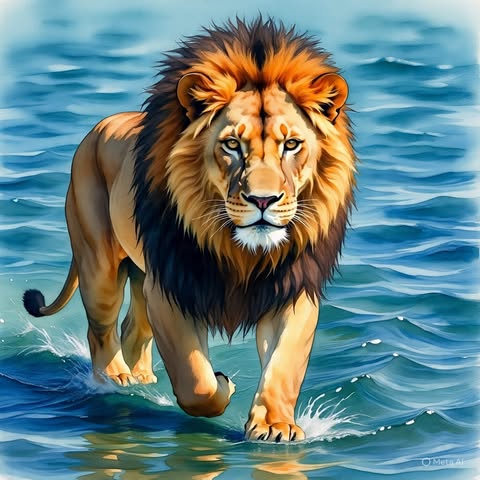
Lions tho…

I’ve lost count of the number of times I’ve seen people having a go at vegans and veganism by referring to other animals’ behaviours and natural states.

For example, they point out that eating animals is the “circle of life”, often referring to lions as though that’s the coup de grace right there. Or they rail against the idea of animal rights, wondering just how on earth (and why) we’d want to adjudicate on cases of intraspecies violations. Funnily enough, lions get a guernsey here too, with critics using lions as the archetypal predator we want to bring to trial for killing others.

The curious thing about this sort of criticism is that it entirely misses the point. In fact, most of the people saying this stuff don’t even realise that lions are pretty much vegan.

OK, I can hear people spraying coffee out their noses already. Lions??? Vegan??? Are you nuts? Well, no, but I should be a little clearer about what I mean. I’m not saying lions are vegans, because only people can be vegans. However, for much the same reasons that I’ve claimed our hunter-gatherer ancestors were vegan so too are lions and other predators.

Here’s why.

Veganism (and animal rights) have just two goals: for other animals to be free and protected from our cruelty, whenever we can do that. It should be pretty obvious that the animals lions kill are free – lions do not treat other animals as chattel property. So right there the main aim of veganism has been met.

Wait you say, those lions ARE pretty cruel. Sure they are, but let’s be clear. First, lions have no alternatives – they are obligate carnivores. Second, they have no better tools available than claws and teeth, so of course the way they kill their prey will seem cruel to us (and their victims, I’m guessing). And third, lions aren’t moral agents the way we humans are, which suggests that their cruelty is simply natural behaviour they aren’t enabled to evaluate, much less change.

So, wild animal prey are free and lions are only so cruel as their nature demands, nor do they have any alternatives. That right there is the very definition of veganism.

Modern human beings on the other hand treat other animals as chattel property, are cruel to them when we know that’s not fair, and have alternatives in most cases. Most modern humans are not living consistently with the aims of veganism, so in a very real way we can say that even lions are more vegan than the average consumer.

OK, that’s all a bit far-fetched, I know. I use this little story to illustrate something about veganism – that as modern people, we have the capacity to make much fairer choices for other animals. Lions do what they must and they fit into their world. We often just do what we want and bend the rest of the world to our whims. All veganism is saying is be more like the lions – keep other animals free and don’t be any more cruel to them than we have to be.
The Ethical Omnivore Movement – An Application of Vegan Principles

I have suggested that Ethical Omnivorism (EO) is a practical application of vegan principles but I have been criticised for this claim. Nonetheless I stand by it. Let me explain.

I propose that veganism is our moral baseline when it comes to our relationship with other, sentient animals. Whenever we seek to do what’s best for animals in recognition of their inherent value and dignity, we are within the moral scope of veganism. Veganism comprises the complete ethics needed to ensure fairness and justice for other sentient animals.

Consequently, the goal of veganism is for us to keep animals free and protected from our cruelty to the extent we can do that in the circumstances. This effectively translates to the formal definition of veganism (which claims to exclude the exploitation and cruelty to other animals from our actions as much as we can).

Thinking of veganism in this way doesn’t change the definition or meaning of veganism in practical terms, but it does somewhat extend its meaning. What I’m getting at here is that the scope of veganism extends far beyond simply diet or non-participation in animal-using industries: when we do anything at all that’s best for another animal just for their own benefit, we are behaving at least in part consistently with veganism. This doesn’t mean that behaving consistently with veganism in some ways means we are vegan, but rather that when we care about animals for themselves we are enacting vegan ethical principles. Someone cannot do things that help to make another animal’s life go well for its own benefit without applying vegan ethics in practice.

This brings us to the Ethical Omnivore Movement (EOM). EOM is an ethical approach to sourcing food within which is the fundamental belief that humans must eat meat for optimal health and that animal farming of a particular kind is critical to ensuring optimal soil health in agricultural lands. The core values of the EOM, as explained on their website, are:

  • Our mission is to support more consumers worldwide to use and to support the production of, the most ethically-produced food, drink, and other goods.
  • There should be no shame in the use of animal-based products – just in the cruel, wasteful, careless, irreverent methods of production.
  • Our shared commitment to ethics extends to all relationships in every area of our lives, especially the one with our gracious Mother Earth.

The EOM opposes:

  • the consumption of any seafood from unsustainable or farmed sources.
  • industrial farming because of the cruelty and environmental impacts.
  • industrial dairy due to pasteurization and the cruelty dairy cows endure, inluding its by-product, crated veal.

The EOM supports and advocates for:

  • local small-scale farmers who get their hands dirty by growing and harvesting produce ethically, authentically and naturally.
  • environmentally sustainable agriculture that increases the biodiversity of the land, favouring organic farming over industrial mono-cropping/monocultures. Increased biodiversity must be an essential outcome for a healthy ecosystem and vital for long-term productivity of the land.
  • ethical ranching methods such as holistic management where pastured animals are fed and raised according to Nature and without cruelty, hormones, or routinely-administered antibiotics.

Clearly, the EOM is a welfarist movement so cannot be considered vegan – anyone subscribing to EOM principles is not a vegan. However, it’s also clear that the EOM philosophy includes clear elements of reducing/eliminating cruelty for farmed animals while also advocating for livestock to have freedom to pursue natural behaviours.

Assuming that the reasons for this are not merely instrumental (ie not meant purely to maximise economic benefit) but are intended to promote higher quality life experiences for these farmed animals for their own benefit, as seems to be the case from the statements shown above, and further assuming that having such concern for other animals can only be possible within a veganistic ethical framework, Ethical Omnivorism can be regarded as a practical application of vegan ethical principles within a welfarist philosophy.

The only barrier to the EOM becoming entirely consistent with vegan ethics is the belief that other animals must be used for both human health and soil health. If a subscriber to the EOM came to believe otherwise, then given their wish to be fair to other animals it seems likely they would adopt the complete vegan ethics.

Let me emphasise though that as it stands, the EOM is NOT a vegan movement. What I am highlighting is that because a significant portion of the EO philosophy’s moral foundation emerges from the moral baseline reflected within veganism, it remains a practical implementation of vegan ethics within a welfarist belief system.

Put simply, the EOM can only be possible because of the fundamental moral beliefs that drive veganism.