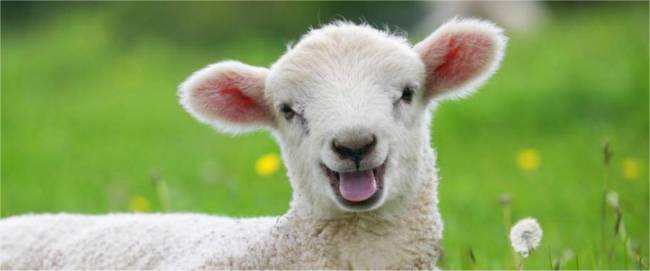
Why eating animals today is neither kind nor natural

The idea of not eating meat or dairy seems to do the average person’s head in. The reason is that most people believe that we absolutely HAVE to eat animals. Usually, their reasoning falls back onto the 3Ns – that is, eating meat is natural, necessary and normal.

Natural: “Humans are natural carnivores”
Necessary: “Meat provides essential nutrients”
Normal: “I was raised eating meat”

I suspect that many people put a lot of store by the “natural” argument. Humans are carnivores/omnivores, they say, and carnivores/omnivores have to eat meat. Never mind that human beings are natural omnivores, not carnivores, and that in our case, omnivory really just means that we can get nutrients from both plant and animal sources. Given we evolved from frugivorous ancestors, we don’t even need the animal sources as we can survive quite happily on plants alone. People just don’t explore the matter that deeply.

Farmers especially seem to favour the natural argument. This seems to stem from a belief that what they are doing is somehow akin to the behaviours of our hunter/gatherer forebears. They are out there on the land, fighting with nature and providing the food that we all need to live.

Both farmers and average Joes imagine that in animal farming, by the slaughter of farmed animals and the eating of them, humans are simply engaging in an entirely natural behaviour, a natural system that we have bent to our own advantage. And I think it’s probable that in thinking so, people believe that this system is inherently kinder than what happens typically in the unfolding circle of life everywhere around us.

On this view, what I think people have in mind is that in everyday nature, life is survival of the fittest. It’s kill or be killed out there and that’s exactly what we are doing, but with the added benefit that we do it “humanely”. As Temple Grandin, an American professor of animal science at Colorado State University, has said, people often forget that nature can be harsh. Predators kill other animals, and they may die a painful, lingering death. Storms and droughts can cause many wild animals to die. Much suffering occurs in the natural world.

Temple observes, “…nature can be very harsh, and death in the wild is often more painful and stressful than death in a modern plant. Out on a western ranch, I saw a calf that had its hide ripped completely off on one side by coyotes. It was still alive and the rancher had to shoot it to put it out of its misery. If I had a choice, going to a well-run modern slaughter plant would be preferable to being ripped apart alive”.

What this leads people to think, especially farmers, is that we are actually doing animals a favour by farming them. Were they to live in the wild, they should run the risk of a terrible death. Whereas, by farming them, we ensure that they are well looked after, and when death comes, it is quick and minimally harmful.

In other words, people cannot understand what vegans and animal rights activists are saying. Eating animals is necessary, people think, and we do it by treating animals more kindly than we might have done in the past, or how they might be treated in nature.

The truth of course is quite simply the polar opposite. Eating animals in modern Australia is not at all necessary. We do NOT have to eat animals to obtain satisfactory nutrition in our diet. As well, there really is no comparison with either how animals might once have been hunted and killed nor with everyday nature. We create the animals for our table, and we treat them as we treat them.

None of those animals will, or ever would, be hunted by our ancestors, nor will they, or ever would they, live in a natural setting. Note too that in a natural setting, most free-living animals do not die before child-bearing age. If 100% of them did, as is the case for many of our farmed animals such as pigs and chickens, there should be very few herbivores indeed. In fact it is highly likely that a very significant proportion of most free-living herbivores live quite long and relatively satisfying lives. Few farmed animals do.

And so, we can only judge the kindness or otherwise of our animal farming system on its own merits, because there is no other system in play for those animals. Worse, because our food is now part of an entertainment industry, the farming system is increasingly industrialised. Intensive farming, or factory farming, turns animal lives into mere commodities, units in a mass production line. Quality of life and capacity to suffer are entirely disregarded in these systems.

Modern animal farming is not natural, nor is it necessary. Human beings are not carnivores, nor even obligate omnivores. We can live on a plant-based diet. The animals who suffer in modern animal farming will never live in any other kind of system and the kindness of the farming system must be judged on its own merits, not by comparison to some other system.

When farmers imagine that their treatment of farmed animals is a kinder option than what might happen otherwise to their animals, they are quite simply wrong. All there is, is what they do to their animals in the absence of any necessity for doing so.

Why DO human beings drink milk?

We’ve all seen the sensationalist posts on social media claiming that dairy products are simply not good for human beings – it’s unhealthy and causes more harm than good. But how true is this? If human beings have been consuming dairy for thousands of years you’d kind of assume that it must have some benefits. Surely it can’t really be the poison many claim it to be.

Of course if the dairy industry is to be believed, milk and other dairy products are absolutely critical to human health. Many health experts and even the medical profession seem to be of the same view; heck, we even had the CSIRO telling us recently that some Australians are – gasp! – moving away from dairy WITHOUT proper medical advice.

https://www.csiro.au/en/News/News-releases/2016/Dairy-avoidance-reaches-dangerous-levels

Hmmm…  That does seem a bit unlikely to me. A food that has been in the human diet for less than 10,000 years and to which nearly 2/3 of the global population is intolerant is THAT critical? I don’t know about you but I regard that suggestion with some suspicion.

Of course, dairy farmers are adamant this is the gospel truth. In fact, in conversation recently a dairy farmer made the claim that “several leading nutritionists attribute the fact that developed countries’ average age is around 80 is due to the fact modern homo sapiens drink cow’s milk”.

Now, I don’t think I’ve ever seen such an ambitious claim before, nor have I ever seen any peer reviewed research that says that. But then again, I am hardly an authority of the subject. I did a quick Google and did indeed uncover an article that referred to a 2009 study that argued that drinking milk can lessen the chances of dying from illnesses such as coronary heart disease (CHD) and stroke by up to 15-20%. It seems this study was some kind of meta-analysis rather than novel research, as the article refers to the “review (bringing) together published evidence from 324 studies of milk consumption as predictors of coronary heart disease (CHD), stroke and, diabetes”.

https://www.sciencedaily.com/releases/2009/07/090722083720.htm

This seems to be rather similar to a recent study along the same lines which uncovered the same general result from a meta-analysis of current research.

http://www.foodandnutritionresearch.net/index.php/fnr/article/view/32527.

I was not able to locate the original 2009 paper, but my guess is that these are largely the same papers given the involvement of the UK’s University of Reading in both. I don’t know how this conclusion bears up to critical scrutiny, but I do note substantial funding from the dairy industry in the more recent study.

By contrast, I found two recent papers that suggest that consumption of dairy products may contribute to increased mortality in some cases.

“High milk intake was associated with higher mortality in one cohort of women and in another cohort of men, and with higher fracture incidence in women. Given the observational study designs with the inherent possibility of residual confounding and reverse causation phenomena, a cautious interpretation of the results is recommended”.

http://www.bmj.com/content/349/bmj.g6015.long

“The role of dairy product consumption in mortality generally appeared to be neutral in men. In women, dairy fat intake was associated with slightly increased all-cause and IHD mortality. More research is warranted on a possible protective effect of fermented milk on stroke mortality”.

http://ajcn.nutrition.org/content/93/3/615.abstract

I won’t pretend this is any kind of exhaustive analysis of the research on my part, I merely use these examples to illustrate the confusion of evidence around just what benefit dairy might offer. Generally speaking it seems there are arguments for both benefits and risks, although I do note that many studies are, in my opinion, confounded by the fact that dairy industry funding is involved.

To be honest, I can’t reach any sound conclusion from the various articles and papers I’ve read. On the whole, dairy consumption in Australia might offer some benefits, particularly around protection from cardiovascular disease, yet it is definitely implicated in increased risks of some cancers. It just isn’t clear to me whether dairy is worthwhile purely in health terms and I am not at all convinced it confers any sort of benefits in terms of longevity.

So, what about all those memes on social media about the awful risks of dairy consumption – how it’s responsible for cancer and bone fractures and all sorts of ailments, or even that it’s full of blood and pus? Well, there’s clearly a grain of truth in most of these but I suggest there is rather a lot of exaggeration going on. Still, dairy consumption does seem to be not without risks.

What all of this does lead me to wonder about though, is exactly why it is that humans consume milk and other dairy products at all. After all, we are the only mammal that has adapted to drinking mother’s milk after weaning. How did this happen and what are the evolutionary drivers for this behaviour and what benefits can we expect from dairy consumption in a modern setting as a result. What I uncovered is quite remarkable, at least to me.

Here, in a relatively quick overview, is an explanation for human consumption of dairy products in a purely evolutionary context. Of course, my usual caveat – this is what I’ve found from my own research, interpreted in my own fashion. I may be quite wrong. But I also think I am not overtly misrepresenting the science. I welcome any comments, clarifications or rebuttals. Please note too that I am addressing the health benefits of dairy consumption in an evolutionary context – I am not addressing the ethical question of dairying in modern Australia.

Mammals express a gene that causes production of an enzyme called lactase that allows them to digest the lactose in mother’s milk until they are weaned. Once they are weaned, the gene “switches off”. After that, drinking milk leads to a variety of stomach/digestive issues. This has evolved because while milk is a great food for a baby, it is obviously too costly for adults to suckle from mothers. So adult mammals get their nutrition from environmental foods.

In human beings, we have evolved a genetic adaptation such that the gene doesn’t switch off. This means we can continue to digest lactose throughout life, and that is called lactase persistence (because the gene allows us to continue producing lactase into adulthood).

The really interesting thing is that this genetic change is quite recent and only arose between 5000 and 10000 years ago. It seems to have arisen several times in slightly different ways. The most common version appeared in Europe maybe 8000 years ago and is closely associated with the spread of farming and domestication of cattle.

Before this, people had been using milk from animals like goats and camels in Africa and the Middle East – in these conditions milk quickly soured so the typical foods eaten were yoghurt and cheese. In both cases, the fermentation process breaks down the lactose which makes it possible for people to eat such foods even with lactose intolerance.

The spread of farming into Europe meant that milk was able to keep for longer, but it was also unlikely to be consumed given the lactose intolerance thing. Eventually, somewhere or other (maybe near Turkey) someone had a gene mutation that turned on the lactase persistence gene. This probably happened more than once, but it needed some kind of opportune event for that mutation to spread.

Once it began to spread, selective pressures were of such high order that it spread quite quickly. Today we can see how that worked by looking at the frequency of this genetic change in populations. In some parts of Europe, up to 100% of the population have lactase persistence, while in others very few do. And of course there hasn’t been either enough time nor cultural changes for it to spread very far. As a result, most of the global population remained lactose intolerant until quite recently – eg native Americans, many Asian populations, a majority of Australian Aborigines etc.

The big question is why did humans develop this adaptation? The answer appears to be that no-one really knows. There are a few theories but further research is needed.

To understand this, we need to know a little about evolution. Evolution isn’t a directed process as such, nor does it have our best interests at heart. All it “cares” about is whether we produce more children. In other words, whatever happens, it is having more surviving offspring that makes the difference and fixes genetic change in populations. Regardless of how the change arose.

In the case of milk, it seems there is something about it that gave peoples in Europe an adaptive advantage. Some of the ideas relate to presence of calcium and Vitamin D but this is not highly regarded nowadays. It might be that it provides some kind of insurance against drought or famine, though quite why or how people would keep their cows alive in times of drought is a little hard to guess.

One very good possible explanation is that we ourselves created the selective pressures by our lifestyles. Nomadic hunter/gatherers tended to eat natural diets that were largely healthy, or they adapted to whatever foods were available (they had to, if they didn’t they would simply die off).

Once we began farming and settling down into large communities, neolithic farmers tended to develop poor health. In fact, agriculture has been described as one of the biggest mistakes in human history! I don’t know about that, but I get the point. It’s certainly one of the worst things that has ever happened as far as all the other animals and the environment are concerned…

Anyways, as settled farmers, neolithic peoples ate less diverse ranges of foods, increased the amount of animal flesh in their diet, and by being in large stable communities it was easier for disease to spread. In such a situation, it is possible that the higher nutritional value of cow’s milk made for a more constant nutritious food supply (for example, crops might fail, or there might be long periods between harvesting and so on).

So communities who dairy farmed had a sort of insurance policy against the very health risks they themselves had created.

What is very clear is that the lactase persistence gene follows the spread of dairy farming – where people farmed dairy cows, the people were (or became?) lactose tolerant…

Of course, this kind of adaptation to digesting lactose occurred elsewhere, for example in Africa, but there it was due to a slightly different mechanism and probably for different reasons. As all mammals produce milk for offspring, humans can probably get the benefit of milk from many different animal sources. The lactose tolerance thing applies to whatever source one makes use of. In other words, the adaptation isn’t about consuming dairy per se, it’s about being able to digest lactose.

So where does that leave us? Well, here is my summarised take on the whole picture.

Human beings can, and did, get all the nutrition they needed from natural sources without dairy, and indeed most of the world’s population still does. Until quite recently we had not evolved to consume dairy products at all. Like all other mammals, we evolved to wean off mother’s milk as we matured and thereafter eat from the natural environment. This appears to have been quite satisfactory in terms of survival, but again I will point out that survival doesn’t necessarily translate into a long, healthy life…

Lactase persistence is a genetic adaptation that must have offered some survival benefit such is the speed with which it spread throughout the population. A likely explanation for its strong selective pressure might be that it is an example of niche construction in evolution – that is, we probably created the conditions to encourage the spread of the genetic adaptation.

It is very likely therefore that the consumption of dairy is not specifically a dietary advantage at all times, rather it is more of a hedge against other environmental factors. Nonetheless, mother’s milk is a nutritionally sound food. This must be balanced against the clear point that evolutionarily speaking, no other animals consume milk past weaning, so nature has never had to ensure that milk confers health benefits over the long term for individuals. I suspect we have no idea how long term over-consumption of milk affects populations.

And that is one of the big risks in dairy. As a short term hedge strategy, it only has to provide sufficient nutrition for people and their offspring to survive and produce more offspring in difficult times. It doesn’t need to ensure a long life, and nor does it need to be consumed all the time. It might be that long term over-consumption of dairy brings with it health risks that are only seen at the far reaches of longevity, or in modern settings. As indeed current research seems to show.

Consider our neolithic farming communities. They would have eaten as they needed of things like animals, fruits, vegetables, perhaps fish, and dairy. Dairy may not have been a big part of their diet, certainly not to the extent we see in modern Australia, and in any case they didn’t have the kind of insights possible in modern health care and research. As they tended to have shorter lifespans, they would hardly have noticed whether dairy had any adverse long-term effects, though they would have noticed if dairy helped in tough times.

What has made the bigger difference in modern times as far as longevity goes is a range of factors such as better health care, less rigorous lifestyles, antibiotics and more generally available foods without the feast or famine kind of cycles. Dairy more than likely fitted in with that quite happily, and any possible risks would be masked by the generally improved health status of Western populations.

And really, it seems highly likely that moderate intakes of such forms of dairy as cheese and yoghurt are probably net beneficial. Milk itself is also likely to have some beneficial effect though here we are probably talking more about convenience – that is, it is easier to get certain nutrients (eg calcium) from dairy than to have to worry about maintaining a balanced diet complete with the right nutrition. In other words, milk consumption probably makes up for the typically poor Western diet.

If that were all there is to the story we might consider that dairy consumption in modern Australia is a health benefit. However the dairy industry encourages over-consumption of dairy products and so it seems likely to me that we are conducting a big experiment on our health by doing so. The results of that experiment might be the kinds of risks now being uncovered, such as increased risks of various cancers. As I noted above, perhaps over-consumption of dairy has health risks when viewed over the longer term.

The bottom line though seems to me to be that there is nothing in the story of dairy that would actually point to dairy being an essential element in the natural diet of a human being. I doubt very much that we have some improved longevity due to dairy – the best that could be said is that the inclusion of dairy in neolithic diets provided a protection against other environmental risk factors.

One curious possibility that occurs to me is that perhaps the same niche construction drivers exist today. Consider that as I observed above, the modern Western diet is generally acknowledged as rather poor. People eat the wrong foods, in particular processed foods, they eat far too much, and we have very sedentary lifestyles. Perhaps whatever benefits are claimed for dairy really only arise in the modern setting because its consumption helps to redress the balance against the same compromised health due to diet and density of stable populations that bedevilled neolithic farming communities.

And consider too the significant role that the livestock industry plays in encouraging people to partake of such poor diets. Could it be that the livestock industry is engaged in a circular feedback loop – compromise human health by encouraging an unhealthy diet/lifestyle and mask that through the consumption of dairy products?

Australia Day 2017

Soon here in Australia – on Thursday January 26 2017 – we will be celebrating Australia Day. This is a national public holiday, a day of family, friends and reflection. As the website “Australia Day” says:

“On Australia Day we come together as a nation to celebrate what’s great about Australia and being Australian. It’s the day to reflect on what we have achieved and what we can be proud of in our great nation. It’s the day for us to re-commit to making Australia an even better place for the future… On Australia Day, half of the nation’s population of 24 million attend either an organised community event, or get together with family and friends with the intention of celebrating our national day. Many more spend the public holiday relaxing with family and friends”.

Australians everywhere will mark this day by embracing those Aussie traditions of family, togetherness, mateship, of giving everyone a fair go.

And so it is especially sad that the Meat & Livestock Association has appropriated this day as the centrepiece for a campaign to encourage us to eat more meat. In particular, to eat more lambs. Somehow the idea has been born that it is the Australian way to sit down to a feast of young sheep.

As Sam Kekovich, the buffoonish Lambassador said this time last year:

“At the end of the day, Australia Day is about a bunch of people coming together around a barbecue, over some lamb, taking a deep breath, and treating people the way you’d like to be treated. Lamb just brings people together. All your family, all your mates. That’s really what Australia Day is about.”

Really? To enjoy what Australia day is all about we choose to ignore all of that stuff about a fair go, about treating others as we’d like to be treated, about making Australia a better place, and instead indulge in the not inconsiderable exercise of killing as many young animals as we possibly can, just for the pleasure of it.

Well, I dunno, I just can’t go along with that. Every year, we steal over 20 million young sheep from their mums and slaughter them for absolutely nothing more than a moment of gustatory pleasure. And the M&LA wants us to ignore what that really means just so we can line their pockets with more profits.

Surely it can’t be that this is all we care about, the sole measure for human behaviours – that it feels good or that it makes money? Why not extend our circle of compassion and say no to profits at the expense of lives, say no to pleasure when the price is pain and suffering. This year for Aussie Day, how good would it be if more of us chose to leave animals off the plate entirely?

It’s a nicer thing to do, and more in keeping with the Australia that we should want to be proud of. One where maybe it’s OK to care for others.

Now THAT would be a fair go.

PostScript:  How cool is this??? Dave Hughes tells us how it is

A thought about what ‘better’ means

I wrote about the matter of welfare policies for farmed animals being something of a red herring. In outlining my position on this matter, I responded to arguments put forward by Temple Grandin. I pointed out that Temple’s claims rest on the proposition that we MUST eat animals, a proposition I regard as flawed. It seems to me that while better welfare policies and practices do confer some improvements for the experiences of farmed animals, this is something of a salve to conscience that legitimises the very fact that we farm them with all the harm this entails.

The following post reblogged here from There’s An Elephant In The Room succinctly captures a similar view…

There's an Elephant in the Room's avatarThere's an Elephant in the Room blog

animal-1845413_960_720All of us are sentient individuals, the majority of whom have never been confined, never been tortured, never been mutilated deliberately and without anaesthesia, never been forcibly impregnated, never had our babies taken from us, never been hooked up to milk pumping machines or egg conveyors, never been starved and loaded onto trucks that take us to a place that smells of blood and fear, where we will hear the screams of our friends alongside the sounds of saws and machinery and know that our own death is coming.

With absolutely no personal experience of the horrors that we inflict on our sentient and desperate victims, who are we to decide how our ‘treatment’ of them while all this is happening, can be improved and better regulated? Yet this is exactly what we are presuming to do when we petition and protest for what we think are ‘better’ conditions in which…

View original post 250 more words

Pragmatic welfare policies for farmed animals – important, but is the very idea a red herring?

farm-welfare-bannerRecently I was sent a link to an article written by Temple Grandin in which she discusses the need for practical approaches to developing policies for animal welfare in livestock farming. Temple is an American professor of animal science at Colorado State University, world-renowned autism spokesperson and consultant to the livestock industry on animal behaviour.

Click to access avoid.abstract.making.policy.animal.welfare.pdf

I found this article quite interesting and agree with much that she says. However, I can’t help feeling that Temple has fallen into a trap that the vast majority of people fall into. That trap is quite simply the belief that human beings in modern societies such as the US, Europe and Australia MUST eat animals for health and nutrition. As a result, Temple’s ideas and philosophy are heavily influenced by that particular point of view. The question I would ask of her is whether she would reconsider her views were she to adopt the notion that we do NOT have to eat animals for health and nutrition. After all, it is a pretty well established fact now that humans can indeed live on a plant based diet AND that heavily meat leaning diets can pose risks to health.

Temple states early in this article that it is highly likely that farmed animals are conscious experiencing beings. If as Temple notes animals can suffer, and animals such as pigs and cows and sheep etc are intelligent, it seems to me to be very difficult to argue that we should kill them in large numbers without good reason. And the science is pretty clear on this – animals experience sensations such as pain, they have emotions, they can experience physical responses to stresses and negative as well as positive experiences and so on. In short, they are just like us in terms of the lived experience.

My proposition then is that when we know that humans don’t need to eat animals for sustenance and we also know that farmed animals are intelligent, experiencing beings that can suffer, surely it is the moral issue that becomes the deciding factor in whether or not we choose to eat them?

We believe ourselves to stand apart from other animals by virtue of our capacity to make reasoned choices and to practice moral behaviours. As far as I can see from both common sense grounds as well as observing the development of moral ideas over thousands of years, we should believe that our first duty is to do more good than harm. It’s why Jesus is claimed to have said “Do unto others as you would have them do unto you”.

Thus as moral agents we should have a charge of responsibility when it comes to dealing with intelligent, sentient and experiencing beings such as farmed animals. I suggest that when it comes to using animals for food and other products, we should do so as little as possible, only for the right reasons, and with the least suffering. In the modern livestock industry, we do the exact opposite. We do it as much as possible and seek to do more of it, we do it for all the wrong reasons, and we often cause far more suffering than need be.

Temple believes that we can ethically farm animals for food and that is probably true within the context I’ve outlined above, but I think a moral distinction also needs to be made when it comes to what we mean by “food”. As I’ve argued before, in Australia at least we have transformed eating into an entertainment. Much of our food consumption is for fun – Australians consume a lot of food simply for the pleasure it brings. Taste trumps everything.

There appear to be two opposing tensions here – on the one hand, as moral agents we should seek to limit harm to others as much as possible. If we must eat animals, then do so only as needed. Yet on the other hand, we have made eating a pleasure and a source of profit. The industry seeks to encourage people to eat as much as possible with no discrimination about what, how and when, or in what quantity.

Temple seems not to grasp this simple fact. When we turn the breeding and killing of other sentient beings into a mass production system to service the greed and gluttony of self-indulgence, I suggest we have well and truly crossed the moral divide. Temple isn’t participating in a thoughtful, welfare conscious process for feeding humans whilst limiting harm. She is in fact helping an industry that causes massive harm for little more than profits.

Simply put, our modern food industry isn’t a machine for good. It is a machine for bad. And that is the very basis for moral evaluation – morals are simply the distinction of good from bad. Which means that the modern food industry is immoral.

Temple goes on to attempt to establish some kind of gradient for moral value based on intelligence. Yet this seems to me to be rather arbitrary if not entirely self-indulgent – after all, the very yardstick for measurement is a human derived idea of “intelligence”. We establish the moral worth of animals according to an entirely human value system.

Why use intelligence? Intelligence really is neither here nor there. We have great intelligence and yet when we consider how we’ve applied it, we have done almost nothing of true worth. We have simply proven to be more fit in selective terms. No better than dinosaurs, and arguably far worse because in little more than one quarter of a million years we’ve brought the planet to brink of extinction. Dinosaurs ruled for several hundred million years without ruining the planet.

Given science tells us – as even Temple admits – that such creatures as cattle, pigs, sheep, chickens and perhaps fish appear to have the capacity to suffer, might this not be a more suitable measure of moral worth? After all, if a pig and a chicken can suffer equally, why discriminate because one performs better at human designed cognitive tests? I think this stance of Temple’s rests on solid ground pragmatically, but her choice of moral measurement seems weak and more designed to meet her own desire/need to eat animals while maintaining moral redemption. Simply put, she’s wrong and she knows it, but like most of us she will rationalise that away.

Finally, I’d like to highlight another weakness in Temple’s argument that I’ve previously touched upon. The old “nature versus farm” chestnut. This one suffers from a logical inequivalence.

Temple says “When animal issues are being discussed, people often forget that nature can be harsh. Predators kill other animals, and they may die a painful, lingering death. Storms and droughts can cause many wild animals to die. Much suffering occurs in the natural world”.

This is a misdirection. It matters not how animals might live in the wild because, as I’ve observed before, not one of these animals ever will, nor ever would have, existed in the wild. It’s like suggesting that harming a human being is fine, because worse harms have happened in some other time or place. One bears no relationship to, nor excusing role upon, the other. All that we can reasonably consider is the life and treatment of the farmed animal because that lies within our own scope of concern and effect. Not some unrelated circumstance.

Temple confirms she’s totally missed the point when she notes that “a flash of insight came into my mind. None of the cattle that were at this slaughter plant would have been born if people had not bred and raised them. They would never have lived at all. People forget that nature can be very harsh, and death in the wild is often more painful and stressful than death in a modern plant. Out on a western ranch, I saw a calf that had its hide ripped completely off on one side by coyotes. It was still alive and the rancher had to shoot it to put it out of its misery. If I had a choice, going to a well-run modern slaughter plant would be preferable to being ripped apart alive”.

This is a nonsense. A farmed animal’s entire life is at the whim of the farmer who caused it to be born. Whether it dies terribly through the predation of coyotes or “humanely” at the slaughterhouse after a short life, this lies squarely at the feet of the farmer. The choice isn’t between some awful natural death and some sweet benign “humane” death because there is no choice and no comparison.

Temple’s comment would be more correct had she said that her flash of insight showed her that all of the cattle being killed had no choice at all because the farmer gave them none. Whatever harm or death these animals suffered were directly caused by the farmer.

Temple seems to be arguing that the farmer has done a good by giving life to an animal that goes on to suffer. This is an empty argument. All we can ever do, in making moral assessments about lives lived, is examine the life that IS lived. And if the animal is a pig or a chicken in an intensive farm, or a lamb snatched from its mother to be killed for a taste, or a male calf killed because his cost outweighs his return, then it would have been better had that animal never lived in order to suffer. The farmer’s choice to give this animal life is not a good. Temple is wrong.

And that’s my feeling about this whole article. While I can see where Temple is coming from, and while I agree with many of her suggestions for how better to formulate pragmatic and more effective real world welfare policies, I think the basis for her argument is fatally flawed.

It is easy enough to see that the modern livestock farming industry does not have at heart the goal of feeding people for sustenance in the most responsible manner possible. In fact, it’s goal is to encourage more and more consumption for pleasure because that’s the only way to grow the industry and retain profitability. Like so much of modern consumerism, it’s a failed ideology.

Really, it’s a simple enough proposition. When we harm sentient beings, we as moral agents should have a charge of responsibility to ensure we do it as little as possible, for the right reasons, and with the least suffering. In the modern livestock industry, we do the exact opposite. We do it as much as possible and seek to do more of it, we do it for all the wrong reasons, and we often cause far more suffering than need be.

Plant-based alternatives are the better course for delivering as much of human sustenance, nutrition and pleasure as possible. We need to find ways to make that happen. If we must eat animals because there is some natural necessity in nutritional terms, then it should be as little as possible and only as needed. That would be the ethical approach.

As Temple herself says in closing, “People have the intellect to become good stewards of both the land and the animals, because they are aware that their actions can cause either suffering or destroy the environment”.

Perhaps we’d do well to take that advice far more seriously.

The conundrum of the caring dairy farmer

Recently I posted my thoughts about the dairy industry in “OK, so I’m off dairy too“. This exposed what I’d learned as part of my recent journey of discovery about what our modern food choices mean. In the case of dairy I really was surprised as I’d always thought of it as a rather benign industry – after all, what could be wrong with raising cows on nice farms where they are milked with care and consideration? Well, it seems I was mistaken – it isn’t all sweetness and light.

Since I wrote that blog post, I’ve engaged in online debate/discussion with several dairy farmers and in all cases I’ve encountered a strong sense of pride in the compassion, care and love with which dairy farmers approach their role. Like any industry there are the “bad eggs”, but on the whole, I am assured, most dairy farmers are good people.

And you know what? I think they are. All of those I have spoken with are thoughtful, decent, genuine and hard-working people who it seems truly believe that what they do is an essential and deeply beneficial element in the fabric of our society. And in a real sense, of course, that’s true.

So how do I square what I wrote in that earlier post with what I have found about the farmers themselves? How is it that people can engage in a business whose very nature requires the exploitation, harm and ultimately death of those upon whom it depends, and yet argue that they are providing an essential service whose hallmarks are care, compassion, love and a deep integrity in ensuring healthy and honourable outcomes?

I think the answer is simple. Dairy farmers, just like pretty much everyone else, are convinced that we HAVE to eat animals to survive. Our erstwhile dairy farmers – decent, hard-working and caring people – operate under what I believe is a complete misapprehension about modern life and natural needs. If a dairy farmer truly believes that milk is an essential and critical part of our diet, he (or she) he can more easily accept the cost of dairying as an unfortunate but necessary cost. Indeed, as a compassionate person, he will ensure that he gives his animals the best care possible, and he will convince himself that what suffering happens is transient, is in some way not especially meaningful. And he will similarly look on his charges rather like missionaries once looked upon native peoples – as simple folk who cannot understand the deeper importance of his own purpose and behaviour.

So I think there’s a certain commonly held Weltanschauung at play. As a society, we simply have held in mind the notion that we are caught up in a natural system beyond our control, a system we simply must participate in. Perhaps it is rooted in some masculine attitude to the world – after all, carnivores appear more alpha than herbivores, and it seems somehow less powerful to identify with peaceful beings than the dominant beings. All other animals fear the carnivore…

As I’ve said elsewhere, once you actually get past that perspective, once you think about things with a different set of parameters, it completely transforms what you believe. Am I right to suggest that this new outlook is more true to our shared ideals of moral or noble behaviour developed through the process of civilisation? Yes, I think so, and so too it seems do more and more people all over the world.

Perhaps if a dairy farmer were seriously open to giving this question honest consideration, he may change his mind. Here is someone who did indeed do just that:
https://youtu.be/SYyjel5VuHg

M Edward King who you see in this video, says this about his choice to live a more compassionate lifestyle:

“These songs and poems began around forty years ago when I was a child growing up on a small beef and dairy farm in the north of England. I had such close contact with the cows and calves that I knew them better than I knew the children at school. Every time those trusting animals had their calves taken from them (so that we could sell their milk), and every time they were sent to the slaughter house (so that people could eat their flesh), my whole spirit cried out: “why did God make a world where this has to happen?”

…The best news of all was that I had the choice of stepping clean out of it, so in the twenty third year of my life I became a vegetarian – for life.

…no person with any sense of ethics or conscience can continue to eat their fellow beings, nor fail to cry out on behalf of those billions of innocent creatures who cannot defend themselves, and whose death cries are so carefully hidden away from all human hearing.”

And here are some more people who’ve turned their back on farming in exchange for a more inclusive and compassionate approach to living:
http://freefromharm.org/animal-products-and-ethics/former-meat-dairy-farmers-became-vegan-activists/

Of course, we need to be careful here not to overly romanticise our place in nature. Nature IS cruel, and life consumes life. Those people who find themselves in harsh or testing environments, for whom eating an animal is necessary to meet their nutritional and sustenance needs, really do need to do so. We should shed no tears for those animals thus eaten. This is life. I talk here rather about our choice to eat animals in any modern industrialised nation. Because in such places we have the luxury to choose, exactly as all those who argue against veganism defend their decision to eat animals. It is my choice, they chorus in thoughtless union. But such choices have consequences, and our responsibility as the moral beings we claim to be should surely be to consider those consequences according to our moral conscience. If we can survive and prosper on a plant-based diet, then why would we not? And make no mistake, we CAN.

Returning to our dairy farmers then. I have previously written of the harm that dairy visits upon the gentle animals it so exploits. This much I think is true and incontestable:

  • Dairy cows exist for our benefit only – we take from them any intrinsic right to a natural life. They exist only because we create them.
  • Dairy cows must give birth every 12-18 months to ensure adequate supply of high quality milk. They get no choice in this. Mother and calf are usually separated very quickly. This is for perfectly sound reasons, however these are artificial reasons generated by the actual situation. It should be clear to all that no dairy cow evolved to be separated from her calf a few hours after birth and this does cause stress to both cow and calf.
  • Frequent calving is of course a significant strain on the animal, but worse, not all of the calves will live for any length of time. I haven’t been able to uncover the correct figures, but at a guess perhaps as many as one half of all calves born will be killed within six months. Industry figures put total calf slaughter numbers at around 4-500,000 per year and the majority die within their first few weeks of life.
  • The veal industry exists because of the dairy industry. Many thousands of calves are slaughtered by 6 months of age to supply veal.
  • Some calves are simply slaughtered immediately as waste. This can be done on farm, perhaps as many as 50,000 calves per year. The balance are transported to slaughter at around 1 week of age. Their body parts are used in low value products and hence they aren’t worth a lot.
  • Cows themselves do not often live long lives despite the protestations of dairy farmers. On average, a dairy cow will live to around 5-8 years of age in Australia.
  • Many cows are “culled” from herds as part of herd management strategies. Around 60-70,000 cows are culled each year.
  • Dairy cows can be subject to a range of negative health outcomes such as lameness, Johne’s disease and mastitis. In some cases this can lead to a cow being culled from the herd. Most farmers will of course provide what treatment they can to ill cows and so they are not simply left to suffer. However, we should note that despite the claims that this is kinder than how they might fare in nature, not one of these cows would suffer anything at all if it weren’t for dairy, for the simple reason that they would not exist. This is not a situation where if not for farmers, the national dairy herd would always have existed, wandering the Aussie bush.

By any measure, this is a great harm. This industry harms, causes to suffer, and kills, well over one million animals every year. Dairy farmers appear unwilling to properly confront this, at least not in my experience. They prefer instead to dissemble, to deflect and to quite simply ignore such facts. I have for example asked a dairy farmer to estimate the average age at death of her herd, yet she could not answer this.

Another farmer attempts to deflect us from this question by highlighting the experience of a cow in her herd. Here we learn that Cheeky Girl might live to be 14 years of age.

The Life of the Dairy Cow

Again on another blog, a dairy farmer encourages more of this kind of comfortable thinking:
https://chdairiesdiary.wordpress.com/2012/01/23/wow-what-a-cow/

I have sought to nail down this question of age at death, but so far unsuccessfully. I do know that cows are culled from herds (the current Year to Date number of cows culled in Australia is some 79,000), and I do know that farmers sell off their cattle as cash flow issues arise. I also learned from research that the average age at death for Australian dairy cows is around 8 years. So, do dairy cows live long and happy lives, on average? I suspect not.

Farmers also appear unwilling to address either the bobby calf issue, or the vealer calf issue. Of the several I have asked about this, all deny being part of the veal industry. One even went so far as to claim his male calves live out their lives in a paddock. That might be possible if his herd is just 10 cows, but I smell a rat on this claim more generally when we consider the numbers I quoted above. perhaps 500,000 calves killed annually, a proportion of which go to veal. Here is some insight into veal:
http://www.abc.net.au/landline/content/2012/s3590827.htm

Note especially these words:
“In the dairy industry, basically you’re milking Friesian cows and Friesian cows, when they have a calf, it’s got a 50 per cent chance of being a Friesian bull. And they haven’t had a lot of value to the dairy or beef industry in the past, so we’re kind of value adding something which had very little value. ”

“Dairies usually send the calves to slaughter when they’re only days or weeks old. Because there is so little meat on them, they’re not worth much. ”

“So, what was happening to these calves before we started the veal was that within a week or two they were discarded or (puts finger to his temple in shape of a gun and clicks tongue to indicate the calves being slaughtered) whatever and suddenly we were grabbing these rejects in those days, worth a lot of money these days, and turning them into animals that led a very, very full and longer life than normally was noticed. ”

How much genuine care, love and compassion can we read into these words? For me, there is precious little indeed. I’m hearing resource, object, product, not a living being. No babies here, ma’am. Just these worthless rejects that I can make money out of now.

So my question then is simple. When dairy farmers tell us of their love for their animals, when they tell us what a noble industry they partake of, when they suggest that there may just be a few bad eggs but really the majority are all compassionate people, what am I to make of the reality I soon find?

What do I do with the fact that dairy is unnecessary to us but is rather more of a pleasure?

What do I think when I hear of the huge numbers of animals killed, those babies discarded as waste? And remember the greyhound industry in NSW is in danger of being closed down for its poor treatment of a tiny fraction as many animals.

How do I reconcile what I have seen first hand – the everyday hardworking decent Australians who farm dairy cattle – with the kinds of attitudes displayed in that Landline article?

Well, I think for me it shows that when it comes to our food choices, we have simply lost sight of a simple fact. We don’t need to eat animals. They are conscious, sentient beings who feel their world in ways not that dissimilar from us. When we farm them, we are not naturally taking from our world as we need. Rather, we have created an artificial, mass production process of harm. We create our farmed animals to harm them, and we have no need to do so.

For me, this is a question worthy of deep moral consideration. As long as we bury our heads in the sand on this matter, I believe we are contributing to a very real decay in our ability as a society to move forward, to forge a moral landscape in which we, and our fellow animals, achieve some kind of identity that reflects our intrinsic worth as beings in this world. We cannot change how other animals see themselves and behave to each other, but we can change ourselves. We CAN be the change we want to see in the world.

Sam Harris, a well known neuroscientist, suggests that the domain of scientific fact, of rational inquiry, should no longer stand apart from our moral considerations. In his view, we should rather let facts as we have uncovered them guide us in our quest to be more moral beings. And he believes that we are in danger of losing our way morally.
http://thebigsmoke.com.au/2016/08/08/morality-now-debate/

I think when it comes to the issue of farming animals, he is right. How can we stand by and create over 600 million animals a year in Australia alone, the vast majority of which will suffer and die after short lives, for little more than the tickle of our palate? What kind of beings are we, when we reduce other beings to the torn flesh on our plates? How deeply ethical can we consider ourselves when other lives are lauded not for their own value, but for the value they bring to the producers who pride themselves on their ability to take those lives from paddock to plate by increasingly harmful and compassionless ways?

Sam suggests that we might better find our way were we to observe a simple axiom: if it hurts, don’t do it. Over 2000 years ago, someone else coined a similar phrase, one which holds the same power today as it did then. Do unto others as you would have them do unto you.

In my world, this simple moral principle should be extended beyond our human companions to those other beings who share our world. We are the first beings to stand on this planet with the capacity to change all that we see. Is there no imperative upon us to think about how we do that?

Dairy farmers are good people, I believe, but like most of us I think they are hopelessly tied to an outdated notion, mired in an evolutionary past we have left behind. I only wish that more of them could take the step to reconsidering just what they are part of, to think more about what they do and how they do it. But perhaps it’s a step too far.

What they may not do, I can and will. I no longer eat or drink dairy products. I ask you all who read this to think about it and choose the same. And just maybe, one day a calf will not be taken from his mother to die for his pale flesh, a cow will not die young because she has given her all to flavour our coffee, and the blood of almost a million living beings will not be washed into the sluices of our abattoirs every year just because we wanted their milk…

Postscript: Something I should add here is that in Australia we are lucky that our dairy industry is still largely the province of family operators. Overseas, massively industrialised operations have reduced dairying to another production line process in which the animals suffer greatly. On farms with thousands of animals, the kinds of personal care we see here in Australia is simply not possible. Veal calves are treated abominably in some countries, and while their lot in Australia is not exactly wonderful, it is at least a magnitude of degree better. Aussie dairy farmers on the whole do care for their animals as best they can within the context of their industry and they do mostly make life tolerable for the cows in their herds. For that I am, as I said above, thankful.

The public debate about animal welfare in farming

What really surprises me is the inadequate public debate about animal welfare in farming. In Australia today we really can live happy healthy lives without harming any animals yet we choose not to do that. In fact, harms are increasing as demand grows, exports are actively sought, and industry practices increasingly favour intensive operations.

The public prefers to keep its head firmly in the sand, but this is slowly changing. However, even though many many people are speaking out, our media channels prefer to stick to the status quo.

For example, whenever this question comes up it is often mocked on mainstream television programs. Rarely is there a feature that addresses the very real ethical and moral questions, and when there is such it is taken as being slightly out there or screwy.

Why? Why should wanting to be more compassionate be seen as nutty? It seems to me that the food industry has done a huge snowjob on the public mind and conscience. People are convinced that we simply HAVE to eat animal products and that we do it really nicely.  And yet that is just not the case.

It’s all very well for people to say that eating animals is their choice and they should be free to make that choice, but when that choice causes suffering and misery for other lives, it’s a choice that really should be better understood before it’s made.

While of course there is debate in various media and fora, it’s the mainstream media that I’d like to see take this subject seriously. And to that end, I’m thinking that the ABC panel discussion, Q & A, would be an ideal platform to launch a renewed legitimacy of discussion around the ethics and morality of animal farming in a modern Australia.

I plan to launch a petition on change.org, a petition to the ABC asking them to do this. Below is the first draft of my petition, I welcome any comment for improvement. I hope this petition gets widespread support – there does seem to be a real groundswell of interest in this matter right now and it’s very opportune to ask Q&A to tackle it.

Petition to ABC

So, tell me again why we eat all those animals?

Globally, livestock farming may prove unsustainable on current trajectories. Studies have suggested that environmental impacts are significant with evidence that this industry is a major contributor to climate change by way of greenhouse gas emissions and land clearing.

In Australia, land clearing for agriculture (as well as for human habitation, industry and transport etc) has significantly altered Australia’s natural landscape, and with it, Australia’s biodiversity. About 90% of native vegetation in the eastern temperate zone has been cleared including something like 50% of Australia’s rainforests (Source: Creating Markets for Biodiversity, Productivity Commission). The resulting loss has seen Australia become one of the most affected countries in the world in terms of species extinctions.

We should also be considering the ethical question of treating animals in this way. Science has shown us unequivocally that creatures such as sheep, cows, pigs, chickens and turkeys have the capacity for inner subjective experience that includes the capacity to feel pain and to suffer. Not one of these animals evolved to be bred in their millions in captivity, constrained against their will, treated poorly and killed young.

Increasingly, to ensure profitability and to meet the growing demand for food, animals are raised in what are known as intensive operations. In Australia, the vast majority of pigs are raised in entirely artificial conditions and subject to a range of cruel and damaging practices. Of the something like 5 million pigs slaughtered annually, around 90-95% are raised in this way. Even dairy, traditionally farmed by small family run operations, is experiencing a trend to larger, more intensive operations.

Something that many people also don’t realise is that while animal products provide sustenance for many, it is increasingly supplying an entertainment industry. People like to eat and food is a major social activity. We see the rise of fast food outlets, restaurants, television cooking shows and so on, all dedicated to making food less a sustaining necessity and more of a casual pleasure. The terrible harms of intensive farming become less convincing when we consider the largely unnecessary nature of this consumption. Simply put, we are killing many many animals for fun.

These issues are significant and demand consideration even if we couldn’t avoid the need to farm animals. However in Australia, there really is little such need. It is entirely possible for people to get the sustenance they need from non-animal based products. A plant-based diet can be as healthy, sustaining, enjoyable and rewarding as a mixed diet. Health authorities agree that limiting meat and dairy intake is important to good health and increasingly we see studies confirming the benefits of a largely or completely plant based diet.

The public debate is dominated by the self interest of the meat and livestock industry, yet should this be so? Considering the impacts in environmental and animal welfare terms, as well as in terms of health outcomes for people, shouldn’t we see more discussion of the negatives of this industry and ways to alleviate these? And shouldn’t the public be told more about the ethical shortcomings of an industry that at every turn seeks to harm millions of animals every year to make a profit?

There is no shortage of thoughtful, knowledgeable people that could contribute to such a debate. And what a refreshing change for the public to hear the views of such people rather than the one-sided conversation that currently persists.

Isn’t it time that the public debate became serious about why we farm animals in modern Australia and what that means for their well-being and ours? We the undersigned believe that Q&A would be a well regarded platform to begin this public discussion and we ask you to devote a panel to this increasingly serious and complex issue.


[Post image sourced from reuters.com]

Why I think not eating animals is a better moral choice

I’ve been blogging somewhat occasionally since October last year, primarily about animal welfare/rights in respect to our farmed animals. While researching, commenting and blogging about this, I’ve noticed an interesting thing. Almost without fail, people who disagree just don’t understand the actual point being made. Or if they do, they do a remarkable job of ignoring it.

Maybe I’m wrong, but I just think it’s such a simple proposition that almost everyone should be able to ‘get it’. Today’s post then, explores the proposition and why it should be so obvious and irresistible. That it isn’t rather flummoxes me!

As simply as possible, here’s what it looks like to me. We are animals and part of nature, that is true. And nature exists by way of many awful processes – most life consumes other life of some sort. The predations of carnivores or the lifecycles of parasites and so on are pretty horrible.

Human beings aren’t somehow remote from that – we did indeed once need to hunt to survive and in many places we still must do that. I have no problem with that. A community in some remote place who hunts the occasional deer or pig or whatever for food is behaving in accord with nature. The animal is free and subject to the normal laws of nature.

But in so much of modern society, this is no longer the case. Let’s take Australia as an example. We have elevated eating from a matter of survival – sustenance – to an entertainment. And as an entertainment, many many people profit from the process, from farmers to wholesalers to cafes, restaurants and supermarkets. And those companies and individuals who profit have a vested interest in promoting consumption, reducing costs, finding more efficient processes and making more profit.

This is in no way natural. It is no longer part of nature. It is an entirely artificial system we have created to service our own selfish desires. This would be fine if there were no great harms associated with it, but sadly, harm is simply integral to the process. Our farmed animals are no longer free beings subject to the laws of nature, rather they are resources bred, constrained and processed for our desires.

We eat pigs, yet there is absolutely no need to do so.
We eat lambs, yet there is absolutely no need to do so.
We consume dairy, and yet there is absolutely no need to do so.

And on it goes. And in each case, great harms are done to the animals. It takes just a moment to research each of these. I’ve commented here about the harms to pigs, and here about the harms to dairy cows.

Why are we so happy to consume more and more and harm more and more as a consequence? Why are those who say No, this isn’t OK howled down at every turn? Surely it is easy to see it isn’t right.

As a society we have been developing our ideas of morality and ethics for thousands of years, and in modern Australia at least, I think we all have a fair idea of what moral behaviour entails.

And yet, we seem to limit this behaviour almost exclusively to human beings, not other animals. And definitely not our farmed animals. Think about it – by your own standards of moral and ethical behaviour, how does humanity measure up in its treatment of all other species?

Clearly, we simply refuse to offer our farmed animals any such consideration. They are systematically treated as property, resources, units of production. It seems to me that this treatment is rooted in an abject failure of human thinking to have escaped the natural constraints of a long gone time. That is, the evolution of human thought and ethics has been woefully neglected when it comes to other animals, and in particular, our farmed animals.

Really, were we truly noble beings we’d make finding ways to avoid killing and harming for food and entertainment something of a priority. In other words, over time we’d see less farming of animals, less killing and harming, less exploitation for fun and profit. Yet we see the exact opposite. I find that deeply disappointing…

If we can produce enough of the right sorts of food to feed and sustain human beings using plant based products and prevent the harm of other animals, then why not? I’m not pretending that we can completely prevent harm – after all, the world is what it is. But surely to be noble beings, we should seek to minimise harm when we can. How can it be that so many people seem to think that a great argument for our industrialised cruelty is something as obnoxiously vacuous and self-indulgent as “Mmmm, bacon”?

It’s a simple proposition. We should not harm and kill animals in monstrous proportions just because we like to. We should seek to be moral beings and live our lives more ethically rather than put our heads in the sand to what our food choices really mean. By any standard of modern Australian thinking, choosing not to ignore this industrialised cruelty and making more informed, compassionate choices around our food is a better moral choice.

It really is that simple.


In 2014, the following were slaughtered in Australia:

Beef cattle    8,764,000
Calves               708,000
Pigs                 4,778,000
Sheep            10,066,000
Lambs           21,899,000
Chickens   600,000,000


OK, so I’m off dairy too

Right now in Australia, the dairy industry is struggling. The farmers have taken some big hits lately and many are going to the wall or really feeling the pinch. Waleed Aly recently spoke of this on The Project and he exhorted his fellow Aussies to consume more dairy, especially cheese.

Now, I’d never given dairy much thought. I happily drank my full cream milk, enjoyed some cream in my coffee, loved a bit of ice cream, and well, you get the picture. I’m like everyone else. Dairy is great stuff. So when I started to be exposed to the claims by animal activists that dairy is an evil immoral industry, I thought, what? I’ve seen the images – all those happy cows being milked, the bottles of milk and cream, frolicking calves and so on. What’s not to like?

But here it is. I recently discovered the horrors of intensive pig farming and what it means for us to eat pigs. This opened my mind to another way of looking at our treatment of our farmed animals and what I found has so profoundly changed my outlook that I cannot believe I never saw this before.

If you make that mental leap, if you truly start to consider what it means to exploit other animals for our own pleasures, all of a sudden the most innocuous things assume a greater gravity. Like dairy.

Wait a minute, I hear you say. Dairy farmers are all great people doing a great job and they are part of the backbone of our country.

Well, I think that in Australia at least, that is probably true. Many, if not most dairy farmers are almost certain to be great people, they do a great job (in the context of the actual process), and they are part of the backbone of our country given how important primary production is. But….

Let’s give some serious thought to the proposition. Now, I am NOT having a go at the farmers necessarily. I think like the rest of us they are caught in a particular frame of mind that has led us away from a more noble way to live.

Straight up, I suggest that no-one needs to consume dairy. Generally speaking, few people eat or drink dairy products for their nutritional or health benefits. Most of us do so because the stuff tastes nice. It’s a pleasure. Which of course is fine, we all like to do things that feel good. But shouldn’t we seriously consider the true equation? What does fulfilling our pleasures cost?

Before I go into that, consider that while most consume dairy for pleasure, the industry likes to play on the supposed health benefits. In fact, one dairy blogger even made this statement recently on her blog:

“I think the overwhelming scientific proof shows that the answer to this question… (should humans drink cow’s milk)… is a resounding YES. The science has consistently shown one of the reasons people in 1st world countries live longer is cow’s milk is now an easily accessible, safe, affordable and nutritious part of our diet.”

Now, I challenged her on that but she chose not to reply. I haven’t been able to research that claim, because I have no idea on what actual basis the claim is made. I won’t pretend to have done exhaustive analysis of the science, but from what I read I am not aware of any specific benefit conferred by dairy that cannot be derived in other ways.

Yes, there is calcium to be had, and that can help prevent problems such as osteoporosis. However, the amount of calcium needed daily is most likely not as high as is often represented, and there are other factors to consider (such as the need for exercise and Vitamin D). The fact is that sufficient calcium can be gained from plant foods (eg leafy greens such as kale). It is also possible to obtain calcium from various fortified non dairy products such as orange juice and soy milk.

I have read that dairy products may be of benefit in preventing certain kinds of colorectal cancers, but without reading the studies I am going to go out on a limb and suggest that these same benefits could be obtained elsewhere – I suspect that the consumption of dairy in such cases is more a matter of the convenience of dairy.

Dairy products are also associated with increased risks of prostate and ovarian cancers and may also contribute to other health risks if consumed to excess. As best I can tell, the most beneficial, least harmful quantity of dairy to consume might be as little as a glass of milk a day.

This is a good summary
This is a slightly more negative summary

On the whole, it seems to me that dairy products are generally best consumed in small quantities, and given possible risk factors, perhaps avoided entirely if we are considering it on a purely nutritional, dietary health basis. Bear in mind too that large scale consumption of cow’s milk is a relatively recent phenomenon and many people are actually lactose intolerant.

So, where does this leave us? Well, I think it’s confirmation that by and large, we consume dairy because we like to, not because we actually need to. So, let’s return to the value proposition.

If we consume dairy because we like to then that behaviour constitutes a pleasure, an entertainment. Perhaps we could simply call it “fun”. After all, what else would we call eating a bowl of ice cream, or drinking a nice milkshake. A pain? A chore? Disagreeable? Miserable? Nope, it’s a pleasure, it’s fun.

So, what’s the cost for this pleasure, this enjoyment? We get our dairy from cows, and the dairy industry exists to service this need. Dairy farmers in Australia breed and raise cows to provide milk. But the sad thing is that this process is anything but benign. I suspect most people are, like I was, ignorant of what actually happens.

Here it is, in a nutshell. You can read a more detailed expose at this link (and from what I have been able to uncover, this is a reasonably objective analysis)

Oh, and if you disagree, feel free to comment, but I’d rather you keep to the facts rather than just some emotive hearsay. I know I might be wrong but I did spend a fair bit of time researching this and I think I’m on target.

****************************************************
Dairy cows are bred to produce milk. No dairy cow would exist if we didn’t create them. It is nonsense indeed to argue that if we didn’t farm them they’d suffer more. No, they wouldn’t because they wouldn’t exist.

****************************************************
Cows are impregnated frequently to ensure milk production. On average I gather this is around every 12-18 months. This is done either naturally (via servicing by a bull) or artificially (someone sticks a rod into their vagina and guides the sperm to its destination by sticking an arm up their rectum).

****************************************************
Calves are taken from their mothers early, usually within a day. Here is a dairy farmer’s arguments for why they should do this.

Now, while good arguments are offered for why this is so (and I think I generally concede the point here), it should be clear that cows did not evolve to be separated from their young. It IS a stressful event, plenty of research and anecdotal evidence supports this.

It also causes certain deleterious outcomes. For example, Flower and Weary found in 2003 that “Calf response to separation also increases when the calf spends more time with the cow, but there are long-term benefits of prolonged contact in terms of sociality, fearfulness and future maternal behaviour. Health, weight gain and future productivity are also improved when the calf is allowed to spend more time with the cow.”

****************************************************
Male calves are generally redundant. Not being a dairy farmer, I can’t speak with authority on how such calves are dealt with. All I can report is what I find from research. Basically, pretty much all male calves are killed almost immediately, although some are kept alive for longer. I doubt many at all survive past their first year or two. Dairy farmers seem to think this is OK, it’s just a necessary drawback to farming. Umm… yeah, sure it is.

In 2015, some 630,000 calves were slaughtered, predominately sourced from dairy.
Around 50-60,000 calves are killed on-farm each year as waste. Farming guidelines suggest on-farm killing should be done humanely, but this can range from shooting to bluint force trauma (eg a hammer).

Industry figures suggest that the average age at death for calves is:

Bobby calf: 1-2 weeks
Veal calf: 4-6 months

Some farmers claim to be more compassionate and will sell their calves to beef farmers who will usually raise and fatten the calves until slaughter. This is often at around 18 to 24 months of age. I suppose that could qualify as ‘compassionate’…

****************************************************
From what I’ve seen, dairy farmers who blog seem to shy away from talking about how male calves are disposed of. I think there’s a bit of head in sand going on. The majority of male calves, as best I can tell, are trucked to slaughter from as young as five days old. As soon as they can make the journey, they are off. Now, again, it’s hard to know how that feels to a calf. But I will go out on a limb and suggest it’s pretty bloody awful. Remember, this would not happen to one calf at all if there were no dairy.

Truly, no matter how a dairy farmer chooses to dress this up, it is horrible. Babies are taken from their mothers, jammed into a truck, taken some distance to a place of slaughter, and there executed. It is emotive to call these animals babies and mothers, but if you can come up with a more objective term then I think you are seeking to paper over the cracks in the façade of compassion.

You can see something of this treatment in the video here. Watch from 1:50 onwards. Warning – this shows graphic violence.

****************************************************
Dairy cows have short lives. Now, again, I haven’t got first hand knowledge and I know some farmers claim that their cows live quite long lives. I am going to call bullshit on this for most cows however. Here is one such claim, but note that the writer is careful not to say just how many 14 year old cows she has, nor the average age of her herd:

“Farmers and cows both benefit from farming, Dennis. An Aussie dairy cow gets to roam in the paddocks, is cared for when she’s sick and, most importantly, doesn’t die a slow, excruciating death as wild cattle often do. And you’ll be delighted to know that we are milking 14-year-old cows on our farm, right now!”

What I can uncover from my own research suggests that the average age of a dairy cow is around 5 years in Australia. At the end of the day, a cow is a unit of production, and farmers cannot afford to be too generous in keeping unproductive animals. As I understand it, culling is an important part of herd management. I believe that cull rates are around 20-30% per annum, but I stand to be corrected if that figure is incorrect.

Dairy Australia notes that the current Year To Date figure for cull cows as at April 2016 is 69,648. Their website notes that “…cull cow prices are still at record highs for the year to date, with sales volume per head up 36%, and the average price up 44%”.

Note that cows natural lifespan can be as much as 20 to 25 years.

This page has some interesting data and information which provides further insight into herd management and culling of animals. I cannot vouch for its validity.

****************************************************
Dairy cows are subject to a range of health risks due to the very fact they have to produce high volumes of milk. They generally tend to produce much more milk for longer than in their natural state. This can lead to significant negative outcomes such as mastitis and lameness. Both are leading causes of death and culling.

While farmers claim that they manage mastitis well, there is evidence that current trends may run counter to this. Shum, McConnel, Gunn and House said in November 2009 in the Australian Veterinary Journal:

“The incidence and causes of mastitis are largely influenced by farm management. The relatively high prevalence of coliform mastitis in the intensive high-producing herds in (New South Wales) contrasts with the low incidence reported in surveys of pasture-based herds in Victoria. If the Australian dairy industry continues its current trend of intensification, coliform intra-mammary infections may emerge as an increasingly important cause of mastitis.”

One interesting fact is that it seems that over time, dairy cows are becoming less fertile (or more accurately, harder to inseminate). I am not sure if this applies in Australia. This means that, given rates of mastitis and lameness have not also decreased, more cows are likely to be culled for reasons of poor productivity.

See for example this paper.

****************************************************
Australian dairy farmers tend to argue that they farm as small family run enterprises and hence can afford to be more humane. This might be true in an abstract sense, however the trend is not in that direction. Yes, most farms are family managed enterprises, but the pressure is to find ways to do more with less. Average herd size has increased from 93 cows in 1985 to an estimated 284 currently. There is also a trend emerging to very large farm operations of over 1,000 head of cattle.

The very problems that Waleed Aly highlights is part of this. It’s also worth noting that the industry is actively seeking to secure overseas markets and like with beef cattle, this will inevitably lead to more industrialised operations. I suspect the small family owned concern may become a thing of the past if dairy continues to thrive in today’s conditions and economic climate.

Falling farm numbers do reflect a long-term trend observed in agriculture around the world, as reduced price support and changing business practices have encouraged a shift to larger, more efficient operating systems.

Note too that on the supply side, farmer-owned cooperatives no longer dominate the industry and now account for less than 40% of Australia’s milk production. The largest co-operative is Murray Goulburn (MG) accounting for nearly 37% of national milk output.

****************************************************
One final comment is to do with what we as humans think cows feel. It is very hard to know how another animal thinks and feels and there is a distressing tendency for most to disregard the inner experience of animals, especially our farmed animals.

When it comes to cows, we should sometimes reflect on the natural evolution of the animal and what that means in terms of outward displays of inner experience. By this I simply mean that when a cow shows little sign of concern such as we might display in a similar situation, I don’t think it follows that we should assume that the inner experience is equally diminished.

It would make more sense to err on the side of caution. Is a mother cow distressed when her baby is taken away? Does a calf experience distress and fear when separated from its mother? Does a bobby calf have a terrifying ordeal on its way to slaughter? Are cows really happy with their increased milk production, risk of lameness, frequency of mastitis?

I cannot say, but I do not believe for a moment that cows are unthinking unfeeling beings. I suspect that their stoical nature is rather likely to be (intentionally?) misinterpreted.

As an example, cow/calf bonding is an essential part of natural behaviour and evidence for this has been noted in research. Marchant-Forde and Weary found in 2002 that “Dairy calves are… capable of individual recognition based on auditory cues at a very early age”.

Vocalisations between cows and calves increase with time after birth, perhaps indicating a survival (fitness) benefit to fewer vocalisations in the first hours after birth. This does not indicate that cows and calves are less bonded earlier as the behaviour may simply be a survival mechanism.

In other words, it may be safer for a cow and calf in nature to keep quiet in the first day or so after birth. But that doesn’t necessarily mean that they haven’t bonded from the moment of birth…

****************************************************
With all of this said, here is my own take on the matter.

1. Dairy is a pleasure and not essential to health or sustenance.
2. The dairy industry exists to make money, not make us healthier, or to make cows happy.
3. Dairying involves substantial harms to animals. It seems that it directly contributes to the deaths of between one half and one million animals per year in Australia.
4. Many animals suffer in dairying. Whether it be mastitis, lameness, other health issues such as Bovine Johnes Disease, the enforced separation of mother and calf, or the horrors of male calf disposal.
5. All dairy cows are units of production. While farmers most likely do care for their animals to an extent, the economic bottom line is always the bottom line. When it comes down to the difference between being profitable and not, the cows will cop it in the skull every time.
6. In modern Australia, we can happily obtain many plant-based milk alternatives. These are in many cases just as tasty or satisfying as traditional dairy.
7. As a pleasure, there is simply no compulsion on us to consume dairy if the cost in animal welfare is too high. I think more of us would do well to think about that.

A wholesale move away from traditional dairy and the greater acceptance of plant based alternatives would be a far nobler choice. And while many might bemoan the loss of their cream or their cheese, I think it’s weak in the extreme to argue that our tastes, our pleasures, are worth any degree of suffering by the cows that would not exist but for our selfish desires.

As for non-dairy alternatives, if this became mainstream, modern innovation would soon find a way to make plant-based options entirely palatable to all. And very soon, we’d have forgotten entirely about why we thought traditional dairy was so essential. It would really only take one generation, after all…

Vegan Cheese!
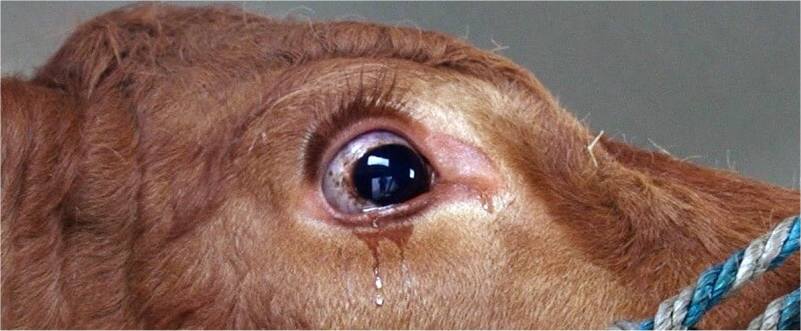
Thoughts on Consciousness in Human Beings and Other Animals

*Note to readers. This is my opinion only. I do not believe in God, nor in an afterlife. I am not necessarily right of course. If you disagree with me, that’s fine. This is just my own thinking about something complicated. If you believe in God and the soul and the specialness of human beings, you might prefer not to read this as you’ll probably just be annoyed!!

*****************************************************************************

This post is not a whinge as such, nor even a proper blog post. Rather, it is perhaps a work in progress, a placeholder to store my thoughts about that most intriguing of subjects – what is consciousness?

When I first began to take an interest in animal welfare and animal rights, I quickly ran into a conundrum. While human beings are ‘conscious’, self aware beings, there is no clear consensus about whether other animals are also conscious.

It became apparent that it is all too easy for people to dismiss the inner experience of other animals on the basis that they do not possess some property that peculiarly makes us human. Implicit in this idea is that human beings are somehow better, separate from and altogether on a different plane of existence from all other animals.

I realised that one way to defend animal interests is to find out whether indeed animals ARE conscious, whether they share with us some common quality of being that leaves us unable to completely stand apart from other life. I embarked on a long inquiry and over the course of 18 months learned a great deal. Of course, the field is extraordinarily broad, complex and deeply multidimensional and my understanding is still at a very rudimentary stage, but I think I have enough knowledge now to make an informed claim about the matter.

The first thing I learned is that although science is rapidly closing in on how the brain works and how consciousness operates mechanically, exactly WHAT consciousness is remains something of a mystery. It seems possible to defend many different ideas – we have a soul, consciousness arises from wide-scale integrated networking, there are multiple drafts of ourselves at any time but the qualia of our experiences do not really exist, and so on.

Nonetheless, I think there have been great strides in recent years and a couple of authors I have read make the best sense of all. While the broad ideas they have developed may not be exactly right, I think they must be very close.

And while too I don’t think I have quite understood them, I think my own synthesis of my learnings is similarly not too far away from the reality.

I should remark a couple of caveats before I set out what I understand from the science and my own introspection. These caveats serve to constrain to an extent just what kind of idea I have in mind when I describe consciousness.

First, I limit myself to what can be empirically tested and observed, that is it is only through our own sensory impressions/perceptions of the world that we can make any sense of it. . I am therefore more of an an empiricist than a rationalist – only by observation and experience can we deduce any truths about the nature of existence. I acknowledge that we are perhaps too limited in capacity to be able to do this with any great precision, but nonetheless I note the remarkable success of science to date in explaining our universe. I note also that any other form of inquiry ultimately delivers an entirely subjective outcome.

Yes, there could be a God. Perhaps we live in some kind of computer simulation. Maybe it is all the Buddha dreaming, or we are simply in one of a million universes foaming in and out of existence. The problem with these notions is that none are able to be demonstrated in any concrete way. We may as well propose that the sky above hides the Asgard of old and that Thor it is that causes the lightning and thunder.

I am constraining myself therefore to scientifically proposed and tested hypotheses and measured outcomes. And I ignore entirely the more extreme proposals of quantum physics for the simple reason that I just do not understand it.

This means that I also accept that there is no personal God as traditional religions would have us believe. I am not entirely resistant to the idea that the universe may have a metaphysical origin, however I think that it is easiest to argue for a universe that is what it looks like. Experience and empirical analysis appear to my mind the most effective tools for evaluating our world.

Secondly, I accept evolution as a fact and that the life we see around us has evolved over billions of years from simple proteins and amino acids into the complex multi-cellular forms of today. Every analysis of life reduces to the same simple components and processes – nothing new is introduced at successively higher levels of organisation.

My third and final point would be that in a universe without a God, in which things are largely what they seem and in which evolution is a fact, I think there can be no conclusion other than to accept that there is no underlying truth, purpose or meaning to the universe. At least, not one that is communicable to us. I completely reject any notion that human beings are ‘special’ or have any kind of anointed status. What sets us apart from other animals is simply a quirk of evolution and circumstance. Imagine our brains in a body with flippers rather than hands…

With these caveats in place, let me proceed to make a minor point of definition.

In terms of sentience and consciousness, I disagree that the two are synonymous. Generally speaking, sentience appears to mean the capacity to feel or perceive by way of sensory organs. Consciousness appears to mean something rather similar, but I think most people would think it requires something more, perhaps a mindfulness of perception.

For my purposes, I wish to draw my own distinction. Whether this is reasonable is probably open to discussion, however I think my basis for doing so is more informed than it is uninformed. I therefore offer the following definitions of common terms to better reflect my own understanding.

  • Sentience is the capacity for an organism to respond to sense impressions.
  • Conscious awareness is the capacity for an organism’s nervous system to respond to sense impressions and adapt behaviour accordingly by way of a representational internal model of attention. This reflects Jesse Prinz’s Attended Intermediate Representations theory and Michael Graziano’s Attention Schema theory.
  • Introspective consciousness is the capacity for an organism’s nervous system to respond to sense impressions and adapt behaviour accordingly by way of a representational internal model of attention and to generate an internal introspective self. This builds on Graziano’s model and introduces Julian Jaynes’ theory of consciousness as a linguistic phenomenon.

I know that sentience traditionally has been defined as the capacity to subjectively experience but I am of the opinion that there are three ‘levels’ of capacity in living things, so I prefer to define sentience as the basic or underlying capacity upon which the successive levels build. It is the foundation if you will.

Sentience therefore is a fundamental building block and is probably shared by all life, though I confess to not being certain whether we can call a single celled creature sentient, or a plant sentient. For the sake of argument, let us accept that any creature that senses its environment and responds behaviourally is sentient.

Conscious awareness is the capacity to represent internally those sensory stimuli detected by a brain. Simple animals, and maybe plants, most likely have no inner experience and simply react to stimuli. They are sentient, but not conscious. Conscious awareness requires that a brain generate internal representations of external/internal objects or sensations. These are what is generally recognised as qualia, for example, heat, colour, sound, emotions. I think it safe to say that all mammals, probably all birds, and more than likely reptiles and fish have this experience. I’m not sure about insects – my own take on this is that insects are sentient, cognitive but not conscious creatures.

Thus, the minds of consciously aware creatures must have access to qualia, although here I am a little unsettled as I am sorely tempted by Dennett’s eliminativism. I will need to think some more on just what qualia might represent or how they might be instantiated, but I am inclined to side with Jaegwon Kim that such qualia are epiphenomenal.

We know from physics and ideas about causal closure that no immaterial mind stuff can affect the physical (at least, as far as we know from science to date), and hence any qualia or mental event cannot of itself have causative effect. Dualism of any sort is effectively disposed of, at least so far as I am concerned. And it is on this basis that Kim similarly dismisses dualism and claims instead that qualia of this kind must be epiphenomenal. However he qualifies this claim somewhat by suggesting that it is only irreducible qualia such as sensations that we might classify as epiphenomenal – other qualia such as beliefs or cognitive artefacts are reducible to physical processes. This is entirely consistent with my current view as exposed in this post.

So, most animals are aware of the world in some way, they experience it through internal representations that we may take to have the nature of qualia and therefore we can assume these animals to feel pain, experience emotions, see the sky as being of some particular quality that differs from that of a tree and so on.

If an animal should behave in a way that suggests an experience of the world and adapt its behaviour accordingly (for example, seek to avoid pain) it seems most parsimonious to conclude that it is indeed conscious and having that experience. After all, the vocalisations by which we come to know of the inner experience of other humans are no more than behavioural responses. All animals, humans included, appear to illustrate conscious awareness by way of behavioural responses so why should any particular behaviour be taken as having some preferential quality?

This now brings us to introspective self consciousness, something I suspect is almost certainly unique to humans, but not exclusively our domain as evolution might endow this upon other creatures in time. This is rather more complicated, but I am guided here by Julian Jaynes’ ideas (see his seminal work, “The Origin of Consciousness in the Breakdown of the Bicameral Mind”). It is clear from introspecting upon our own thoughts and subjective experience that consciousness of this kind depends entirely upon language. Yes, our cognitive capabilities are clearly better, but that is simply a process thing. Our brains just do that stuff better. There are other animals that in their own ways demonstrate some rather impressive cognitive capacities (take Corvids for example) so I am not prepared to embrace an absolute ‘apartness’ for humans on that basis.

No, language is what gives us an apartness and more specifically it is written language. Written language is the decider. I should like to expand upon this claim but it is rather more difficult to address in a simple overview such as is in this post. It might be something to return to in time. Let’s simply agree that here I argue that language both spoken and written generates introspective self consciousness.

Now in considering the impact of language I believe that Julian Jaynes has made a contribution to the study of consciousness that has not been properly appreciated. He argues that language has given rise to the internal introspective “I” form of consciousness that we humans possess. He may not have it exactly right, but I think he is clearly on the right track. And he suggests that this form of consciousness is a relatively recent development, perhaps as recently as just a few thousand years ago. If he is right in this, we have only been ‘conscious’ for a very short time.

What I mean by language giving rise to introspective consciousness is that if we consider what it is to be in our own heads, it is our internal narrative that we think of. It is the sense of being “me”, being some “thing” that entertains ideas, that plans actions, that can report upon my state. But this is a very shadowy and shallow thing indeed. Much of what I think many of us take to be “us” in action is in fact not at all consciously appreciated nor driven.

For example, we do not appear to have access to our thoughts. We know we have them, and we can report upon them, but we do not have access. It is of course hard to say what we mean by thoughts, but here I mean them to be those neural activities through which we evaluate our relationship to the world and decide to respond in some way. Whether that be simply to turn the radio up louder, or to put on a coat or to develop a theory of consciousness, the act of responding to the world requires that we think.

Consider for a moment that in thinking, we are never conscious of the thoughts themselves, only of the perceptual imagery that accompanies this process – verbal imagery (words in our mind) or visual imagery (pictures, diagrams in our mind). Too, we don’t think in words just which words to think, that is to say we do not plan our sentences by carefully describing in words what other words we will place in what order to produce our sentences, rather our sentences spring into being fully formed. If I think, “I am going to bed now” it is an expression of an idea or thought already formed. It has to be for the simple reason that if all conscious reports are produced by the brain, the actual neural circuitry must have done its job before it issued the orders to the motor cortex to cause us to make the words needed to report. We cannot issue the report until the work has been done.

Yes, I know that in complex or abstract thought we do actually use sentences, words, to construct other sentences, but I suggest this is an iterative feedback looping process by which we seed the underlying neural activity. This idea that our brains can respond to an internal iterative looping process simply means that we can respond to our own speech, our own narratives, as though they were issued by others. The brain mechanism that enables us to hear others’ words and act upon these also acts as an internal feedback loop in responding to our own speech. This mechanism most likely rests upon the recently discovered “mirror neurons” although I acknowledge there is still some degree of controversy over just what these are and whether they truly exist. I suggest this mechanism, this feedback loop, is precisely what Professor David McNeill has dubbed Mead’s Loop, based upon the ideas of the early 20th Century philosopher, George Herbert Mead. Mirror neurons in Mead’s Loop are “twisted” to respond to one’s own gestures as if they were from someone else.

We can see then that verbal reporting, or internal narration, is not really the physical act of thinking itself, but rather a descriptive or metaphorical representation of the neural circuitry in action. Thoughts are not directly apprehensible at all. The metaphorical representation however is exactly what we apprehend and what we take to be “us”.

Thus, the process by which our brain processes its sense data and other information is not actually what we mean by introspective consciousness or what we think of colloquially as “me”. The model of awareness that we share with other animals gives us the sensation of qualia, and I think this is ably described by Graziano and Prinz, but the sense of “I” is generated by way of language and metaphor.

Another way to think of this is to imagine what would be in our heads without language. What would be left of you, had you no language or learning to operate upon? I suggest no “you” at all, beyond the immediacy of existence. In this respect, it is instructive to recall Helen Keller’s words in her essay “Before the Soul Dawn”:

“Before my teacher came to me, I did not know that I am. I lived in a world that was a no-world. I cannot hope to describe adequately that unconscious, yet conscious time of nothingness.

I did not know that I knew aught, or that I lived or acted or desired. I had neither will nor intellect. I was carried along to objects and acts by a certain blind natural impetus. I had a mind which caused me to feel anger, satisfaction, desire. These two facts led those about me to suppose that I willed and thought. I can remember all this, not because I knew that it was so, but because I have tactual memory. It enables me to remember that I never contracted my forehead in the act of thinking. I never viewed anything beforehand or chose it. I also recall tactually the fact that never in a start of the body or a heart-beat did I feel that I loved or cared for anything. My inner life, then, was a blank without past, present, or future, without hope or anticipation, without wonder or joy or faith.”

And her awakening upon beginning to know language, when she first appreciated the relationship between a finger-movement against her palm and the idea of ‘water’:

“That word startled my soul, and it awoke, full of the spirit of the morning, full of joyous, exultant song. Until that day my mind had been like a darkened chamber, waiting for words to enter and light the lamp, which is thought”.

(As an aside, notice here the striking contrast between the non-world of conscious unconsciousness first described and the bounding, fulsome world of metaphor that springs forth in that final paragraph).

Without language, there can be no “me”. If we do not have language and hence an introspective “I” in our heads, what then might we have? The answer appears to be that we do not have anything at all. At least, not of that nature. Our brains construct Graziano’s model of attention sure enough because without that we are not going to be able to adapt our behaviours, but beyond that we simply do what we do. And that in itself is pretty much what we do most of the time anyway – we don’t accompany our every moment with a running commentary upon which our actions depend. Rather, we just do things.

With language of course comes a more complex “me”. But “I” am still simply a narrative, a description of how my brain works. The linguistic “I” exists to permit social communication, to permit more adaptive flexible behaviours. It is an evolutionary adaptation which confers not some ineffable spirit but rather a metaphorical representation of representations. If you think about this kind of consciousness, it becomes apparent that it has a spectrum quality, that it must exist as a continuum across place, time and culture. Introspective consciousness depends upon cultural context, knowledge, local customs and frameworks of behaviour. This consciousness is a cultural construction derived from the necessary evolutionary pressures of social cohesion.

In other words, there is NO “me”, certainly not in the rather spiritual way that most of us think of ourselves. We do exist as organic beings with brains and nervous systems and a disposition to behaviours in response to stimuli. But there is no spirit, no essential me-ness, inside our heads. “I” am an illusion. A useful illusion, but an illusion just the same. Around us are other illusions – organisms responding in complex ways to changing environmental conditions, always with a cultural context to those behaviours and apprehensions of the environment.

The problem here of course is how we apply an ethical framework to creatures that respond to stimuli in complex ways but for which no actual causative agent exists. How do we determine what values or behaviours are right? How can we even know what ‘right’ is? What individual or personal responsibility exists if we can do no more (or less) than our nervous system decides to do?

Personally I am very happy to work on the illusory basis that I exist, I experience the world and I am responsible for what I do. But if people generally were convinced of the physical reality that none of that is true, where to then for meaningful ethical frameworks? In an uncaring world without objective meaning, any behaviour is OK because it carries no moral value.

I have no answer to this. I therefore believe that moral and ethical frameworks have no intrinsic properties but can only derive from some cultural process, be that democracy or autocracy. There is no higher authority to which we might appeal, beyond the obvious notion that for survival and social cohesion, “good” must be considered to be something that assures a fitness advantage.

And thus “right” and “wrong” depend entirely on place and time, and the workings of history.

There is no ME, and right and wrong depend for their truths upon a social contract between consciously introspective organisms.