A frequent angry objection to veganism and vegan advocacy is that because vegans kill animals too, they don’t hold the high moral ground. This seems to stem from a wish to show vegan principles don’t lead us to a better or more morally desirable outcome, perhaps because the critic objects to being found morally wanting themselves. Put another way, critics seem to be saying that chasing a higher moral ground is objectionable, yet the history of human moral evolution is the exact opposite. Only by striving to do better can we advance as a moral species.
I want to allay the fears of such critics. A moral “high ground” is typically a stance or position which adheres to standards of justice or goodness and demonstrates consistency while leading to better moral outcomes. Seeking to act with moral clarity and striving to tackle injustice are morally desirable behaviours; the moral “high ground” is indeed what we should seek. It would be odd indeed to proclaim our humanity while arguing in favour of a race to the bottom.
When it comes to veganism, vegan ethical principles consistently encourage us to tackle injustice to other animals and when applied with any conviction will always mean better moral outcomes in that regard.
There IS a moral high ground when it comes to treating other animals fairly and vegan principles help us to make choices that take us closer to that. When critics argue that vegan ethics do not lead to better choices than otherwise, they are simply wrong.
People sometimes criticise vegans for causing insects to be killed by farmers protecting crops, but this seems rather disingenuous when we notice that everyone kills insects all the time and they are killed in vast numbers both to protect human food crops as well as feed for livestock and even in livestock production itself.
One reason people bring this up is they think veganism is a doctrine of least or zero harm, but that’s not exactly true. Vegan principles are about freedom and aim to prevent unfair use of animals and their treatment as property (you can read more here about what veganism is really trying to achieve). Still, vegan ethics also ask that we do what we reasonably can to prevent cruelty to animals.
Given vegans can’t do much to influence farming methods and that killing insects to protect crops is necessary, it’s not wrong for vegans to demand food be protected from insects, just like most everyone else. Luckily, it’s likely far fewer insects are killed for a vegan lifestyle than otherwise. On average, such a diet will lead to less overall harm to animals than a typical consumer’s diet.
But do we even need to care that much, really? I’d suggest that we all intuitively recognise that insects can’t matter individually in all contexts – if they did, we wouldn’t drive cars, fly in aeroplanes, use pest sprays to control insects in our homes, control insects in our gardens etc. We are backed in thinking this by a couple of facts:
Insects’ own lifecycle works on a numbers game – individuals don’t really count. What matters is species success. Insects are an example of what can be described as r-selected reproducers. In other words, insects have many offspring and invest little care in those offspring. If enough are created, then most can die so long as enough survive to maintain the species.
Insects have limited “sentience”. While some may “feel” pain they have very much simpler emotional circuitry so we can’t say that their pain matters as much as say a cow’s. Insects have a much less rich inner experience than more complex animals.
The reason we might worry about many animals is that their form of sentience entails an internal awareness of, and personal relationship with, themselves and other members of their species. They can have emotions, motivations, preferences, attachments and so on. Such rich inner lives means they matter in and of themselves and they matter enough that for them, justice matters.
Most insects, on the other hand, do not have such rich inner lives and operate largely on essential behavioural routines to achieve their goals. Take ants, for example. Ants recognise each other by chemical signals – they can tell which ants belong to their colony and what roles they play. But that’s as far as it goes – they don’t think of a fellow ant as Ralph from next door.
For an ant colony, what matters is if there are enough ants to fulfill the colony’s essential functions. It doesn’t matter if 100 of them are killed by a bicycle running over them; no-one misses them individually. There are thousands of others to maintain the colony.
In the end, just as we accept killing cockroaches in kitchens, mosquitoes to prevent malaria, and termites to protect our homes when we must, and even by living our everyday lives (for example, over 200 trillion insects might be killed every year just from driving motor vehicles), we should not feel it’s wrong to kill insects to protect our food.
Of course, I’m not saying we shouldn’t care at all, just that when we have to kill insects to protect ourselves, our property and our food, we are not making an immoral choice. It is absolutely still worthwhile to make choices that minimise harms to insects when we can! And we can apply the Principle of Least Harm (an ethical principle whereby we should choose the least harmful of any two or more harmful options) to make wiser choices about what plant-sourced foods to buy, though it would be hard to say how much real world effect that might have.
****************************************
Don’t forget, no-one needs to be a vegan to adopt and apply vegan ethical principles in their daily lives to make a positive difference for other animals. If you’d like to know more, you can read my essay that offers a deeper dive into the meaning and application of vegan ethics at the link below:
There sure is a lot of confusion about veganism these days, which is a shame. It’s a great idea. So, let’s try to clear up some of that confusion.
TLDR version:
Veganism is primarily concerned with freedom and entails rejecting the chattel property status and unfair use of animals, when we can reasonably do that. The principles also ask us to reduce/prevent unnecessary cruelty, again when reasonably possible. Finally, it’s voluntary, so people are free to do whatever they think best. It’s not about zero or even least harm, though that can be a consequence in some contexts.
Longer version:
Veganism is the name given to a pretty simple idea – that animals matter enough for us to want to treat them with fairness and compassion, when we can do that. If we think that’s important, we can adopt vegan ethics to help us make good choices for other animals whenever we can (or are willing to).
Veganism is a modern idea that aims to tackle our injustice to other animals. This is not some deeply unnatural notion – surprisingly, even the rest of nature is far more aligned with vegan aims than most modern consumers.
Vegan ethics helps us achieve three simple goals:
To keep animals free (ie not treated as chattel property and as objects of production);
To prevent our unfair use of animals; and
To protect animals from our unnecessary cruelty.
You might ask, well… what’s “unfair” mean? In this context, it means using an animal for some purpose when we either don’t have to, or can use an alternative. Vegans choose not to eat meat because farmed animals are chattel property and we have alternatives (ie plants). Similarly, vegans don’t fund the use of animals in entertainment, again because the animals are treated as property and we just don’t need to do this.
A lot of people confuse vegan ethics with the principle of least harm, but while we can use that principle to make good choices, vegan ethics are not specifically aiming to do that. Vegans aren’t choosing to avoid eating meat so as to cause least harm, they are really choosing not to support exploitive systems that treat animals as property and use them unfairly.
Critics often think that vegans can never kill an animal and that it’s hypocritical for vegans to buy plant-sourced foods when wild animals are killed to grow that food. That’s really a misunderstanding. Within existing farming systems, killing of wild animals to protect agricultural infrastructure and production is unavoidable, whether we are talking plant or animal sourced food production. Alternatives either don’t exist or are not practical and consumers are hard-pressed to influence farmers’ methods.
Similarly, animal use for medical research when necessary is not a violation of vegan principles (though in this case, what is “necessary” is very much open to debate), nor is the management of wild animal populations when necessary, nor the killing of disease carrying animals (eg mosquitoes), again when necessary.
Yes, killing wild animals for crop protection is often cruel so we can apply the principle of least harm to make less harmful choices (for example, eat less wheat), however it’s hard for consumers to have much influence over what farmers do nor is it clear that swapping one food for another makes any real material difference. Very few consumers can choose to buy foods that don’t demand some animal cruelty and death.
Vegan principles ask us to see other animals as important, as mattering enough to prevent injustice to them. We can all adopt these principles and do what we can (or are willing to do) to make a fairer world for other animals.
It really is that simple. Adopting and applying vegan ethical principles is one of the most effective and easily understood ways to help us be fairer and kinder to other animals. And everyone can do that.
If you’d like to know more, you can read my essay that offers a deeper dive into the meaning and application of vegan ethics at the link below:
There’s a lot of confusion about veganism yet it’s a really simple idea – let’s be as fair as we can to other animals. We put it like this:
“Veganism recognises the inherent value and dignity of other species and aims to treat them fairly by our choices whenever we can. It has just two aims – to keep animals free, and to protect them from our unfair use and cruel actions when we can do that.”
You can learn more about veganism and why it’s so important today in the free booklet linked below. We also tackle some typical criticisms about veganism and point out that if animals matter to you, veganism really is the most effective, rational ethical stance you can adopt to guide your choices and actions when they affect other animals. Honestly, vegan ethics just make sense.
Feel free to offer any comments, feedback or criticism in the Comments section below.
I’ve lost count of the number of times I’ve seen people having a go at vegans and veganism by referring to other animals’ behaviours and natural states.
For example, they point out that eating animals is the “circle of life”, often referring to lions as though that’s the coup de grace right there. Or they rail against the idea of animal rights, wondering just how on earth (and why) we’d want to adjudicate on cases of intraspecies violations. Funnily enough, lions get a guernsey here too, with critics using lions as the archetypal predator we want to bring to trial for killing others.
The curious thing about this sort of criticism is that it entirely misses the point. In fact, most of the people saying this stuff don’t even realise that lions are pretty much vegan.
OK, I can hear people spraying coffee out their noses already. Lions??? Vegan??? Are you nuts? Well, no, but I should be a little clearer about what I mean. I’m not saying lions are vegans, because only people can be vegans. However, for much the same reasons that I’ve claimed our hunter-gatherer ancestors were vegan so too are lions and other predators.
Here’s why.
Veganism (and animal rights) have just two goals: for other animals to be free and protected from our unfair use and unnecessary cruelty, whenever we can do that. It should be pretty obvious that the animals lions kill are free – lions do not treat other animals as chattel property. So right there the main aim of veganism has been met.
Wait you say, those lions ARE pretty cruel. Sure they are, but let’s be clear. First, lions have no alternatives – they are obligate carnivores. Second, they have no better tools available than claws and teeth, so of course the way they kill their prey will seem cruel to us (and their victims, I’m guessing). And third, lions aren’t moral agents the way we humans are, which suggests that their cruelty is simply natural behaviour they aren’t enabled to evaluate, much less change.
So, wild animal prey are free and lions are only so cruel as their nature demands, nor do they have any alternatives. That right there is the very definition of veganism.
Modern human beings on the other hand treat other animals as chattel property, are cruel to them when we know that’s not fair, and have alternatives in most cases. Most modern humans are not living consistently with the aims of veganism, so in a very real way we can say that even lions are more vegan than the average consumer.
OK, that’s all a bit far-fetched, I know. I use this little story to illustrate something about veganism – that as modern people, we have the capacity to make much fairer choices for other animals. Lions do what they must and they fit into their world. We often just do what we want and bend the rest of the world to our whims. All veganism is saying is be more like the lions – keep other animals free and don’t be any more cruel to them than we have to be.
Unlike other animals, humans have moral agency – we care about what’s right and wrong. We’ve been developing this quality for thousands of years with the goal of making life go well not just for ourselves, but other people too.
We can also extend this moral concern to other animals. To some degree or another, that’s been a hallmark of human attitudes to other animals for much of our existence, but in recent times moral thinkers have refined just how we might go about this (and how far our concern should extend).
One notable step forward in this regard was the formation of the UK Vegan Society in 1945 from which came both the concept of veganism and one’s personal identity as vegan. Cutting a long story short, the founders of veganism were hoping to free animals from their harmful and unfair use by people and by so doing help advance the human condition. This sense of veganism was somewhat driven by emotional and moral reactions to World War II.
Veganism is a secular ideology – it doesn’t depend on a faith-based outlook – so anyone at all can be guided by its principles. Those principles have been refined and expanded in meaning since 1945 by later ideas such as animal rights and animal protection. But at the heart of all of this remains the core belief that human beings can care about how life goes for other animals.
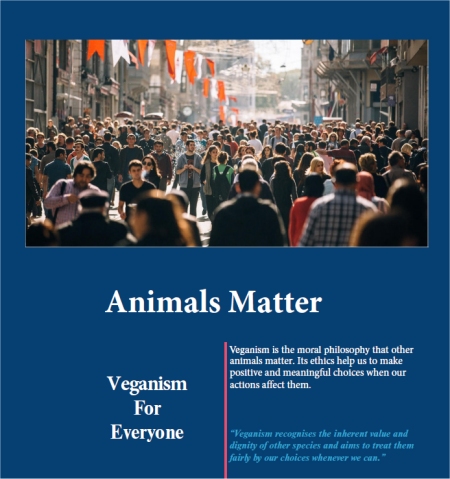
“Veganism recognises the inherent value and dignity of other species and aims to treat them fairly by our choices whenever we can.”
Boiled down into everyday terms, I am proposing that veganism is the moral baseline for human treatment of other animals. At its simplest, veganism gives rise to just two core principles – that whenever we can, we should keep animals free and and protected from our cruel treatment so that life goes well for them.
This is not to redefine veganism as it was originally thought of by the founders of the UK Vegan Society. Rather, it makes much more explicit just what they intended in their own ethical and moral attitudes to animals, and by extension, the improvement of the human condition.
I offer one caveat to this. Veganism, so regarded, remains for now a personal and voluntary ethical program (no-one has to be a vegan). Everyone is free to adopt vegan ethics as they see fit, according to their own motivations and circumstances. This means that there is no action someone can take that seeks to make the lives of sentient animals go well for them, just by virtue of their own existence, that is not at least in part consistent with veganism (or more exactly, vegan ethical principles).
For example, animal welfare regulation (particularly when it reflects current thinking such as the Five Freedoms or A life Worth Living) seeks to ensure that we are not cruel to animals when we can do that, so it is partially enacting at law one of the core principles of veganism. Likewise, philosophies such as Ethical Omnivorism are deeply anchored to those very same core principles. In that way, the Ethical Omnivore Movement remains a practical application of veganism (though to be clear, the Ethical Omnivore philosophy denies the core aim of veganism for animals to be completely free, thus Ethical Omnivores are NOT vegans).
I’m sure you are familiar with the outrage vegan advocacy so often draws on social media. One of the most curious complaints (which is everywhere these days) is the suggestion that vegans are really the biggest culprits when it comes to causing harm to other animals. Say what? This is quite the odd claim when you think about it. As a philosophy, veganism is committed to doing what we can to be fair to other animals, so by its very nature you’d imagine the ethics guide us to avoid harming other animals whenever we can.
The criticism seems pretty wide of the mark but OK, what if vegans really are doing a worse job than most? How would we know? Well, it depends a little on exactly what critics are getting at and usually they are restricting their criticism to just one thing – that more animals are killed to eat a vegan-friendly plants-only diet than an everyday diet. If – so the story goes – if you want to cause the most harm to animals, be a vegan and expect crops to be grown to feed you and see just how many wild animals are killed for your food. We’ve all seen the rant from John Dutton (played by Kevin Costner) in Yellowstone and repeated on the Joe Rogan show. What we should be doing is eating grass-fed beef, where just one animal is killed for our food each year.
Seems legit. Except… it’s wrong. In reality, nearly everyone is not doing that at all. They are actually eating plenty of plants (eg fruit, vegetables, grains, seeds, nuts, sugar and derived foods such as bread, cakes, beer, wine and so on). Plus, they are eating quite a few animals, most of which are raised in “factory farm” conditions and also require crops grown to feed them.
Yes, it might be possible to adopt a super restrictive diet and eat nothing but beef from range-grazed cattle that are not supplementally fed. But who is going to do that and why should they? People like dietary diversity and nutritionists recommend we eat a mix of plants and animals. What might be more illuminating is whether or not on average a vegan-friendly diet is way worse than an everyday diet in the number of animals killed.
Now, I’ve tackled that question a few times before so I’m not going to go back over it. You can read one of those articles here. However, the bottom line is that more animals are killed to produce food for an everyday diet than for a vegan-friendly diet, so if you care about that fact you should be congratulating vegans for trying to make a difference. Yes, that’s right – if you do care enough about other animals that you think we should source food in ways that reduce harm to other animals, a vegan-friendly diet is a very good way to do that.
But it gets better. Veganism and animal rights are a far broader ethics than just what people eat. In fact, veganism asks us to be fair to animals whenever our actions affect them and the aim is to prevent using and exploiting them and being cruel to them when we can choose to do that. Vegans try not to support activities that use, abuse or otherwise harm animals. For example, vegans (and indeed, anyone that adopts the ethics and is guided by those principles) will typically not buy products from animal farming nor from companies that routinely test on animals, they don’t support animal circuses and often-times zoos, they don’t support commercial animal entertainments such as horse racing and so on.
If anyone is making an effort to make life better for other animals, it’s vegans. Sure, plenty of people try to be kind to animals and that’s great. We all want that. However, veganism is an ethical framework specifically aimed at delivering fairness and justice for other animals, so when people criticise veganism and vegans you can tell they aren’t genuine in wanting us to do better for other animals. If they were, they’d adopt the ethics themselves and help encourage vegans (and everyone else) to make the best choices they can. Of course, vegans might get things wrong here and there, but it would be hard to prove that they actually are doing worse than the everyday consumer.
In the end, it seems very difficult to sustain the argument that vegans are somehow doing worse than most. John Dutton is simply wrong.
Really, vegans are the people trying to make a difference. They ought to be congratulated, not criticised.
One further thought before we leave this discussion. Critics often don’t realise just how little land is needed to grow enough food for a person to eat a vegan-friendly, plant-based diet. As mentioned above research suggests such a diet needs as little as around 0.13-0.17 hectares of cropland per year. Let’s use 0.15 hectares as an average requirement. But what does this really mean?
Critics usually want to say that some vast number of animals are killed to grow crops and of course that’s true, but that is because we use crops to feed people, the animals they eat, to produce vegetable oils, biofuels, other industrial applications and clothing. And we do that for 8 billion people in a capitalist market economy. Of course the scale is vast.
But what about at the personal level where the vegan rubber hits the road, so to speak. Well, when it comes to animals killed to produce plant-based foods, we don’t really know. There have been many estimates, and one of the highest I have ever seen came from Professor Mike Archer who claimed that in Australia, about 100 mice are killed on every hectare of wheat production. Archer based this estimate on the numbers of mice killed during mouse plagues in wheat fields. While we can’t extrapolate from this what the cost is to produce other crops, we might assume that averaged overall, the 100 wild animals killed per hectare of crops is not far from the truth. We should note that this means some 2.5 billion wild animals are killed on Australian croplands (excluding invertebrates) each year, which does seem unlikely (see example number 3 below).
That claim has since been discredited, but let’s assume he’s right and use his numbers of 100 to look at some estimates about what that means for a vegan-friendly diet. First up, we can see that if a vegan-friendly diet uses 0.15 hectares of land, just 15 animals are killed in a year for that diet. This is rather less than the 50-100 animals killed for an everyday diet.
What about some specific food-related cases? Let’s look at three, using Professor Archer’s 100 animals killed on a hectare of cropland.
Plant milks. Oat and soy milk production requires growing oats and soy. It turns out that about one hectare of these crops can return about 20-30,000 liters of “milk”. If that’s so, and the average person consumes about 100 liters of milk in a year, then their share of any wild animal deaths is about 0.004 of the hectare’s production. That could mean that about one-half of a wild animal is killed for a year’s oat milk. By the way, it’s worth noting that a hectare of land used to produce dairy milk delivers around 6,500 litres of milk.
Update: It’s been pointed out that while in some places (eg New Zealand, the US) a hectare of oats can produce maybe 30,000 litres of “milk”, in Australia the quantity is closer to 6,500 litres. Also, while the average per capita milk consumption is about 100 litres in a year, many people consume as much as 300 litres. So to be fair, we can ask what that changes in the the Australian context. The answer is that a typical oat milk drinker might need about .05 hectares of oats grown. At 100 wild animals killed per hectare, that means the death toll will be about five.
Sugar cane. Much is made by some critics of vegans eating sugar and causing animals to be killed for a taste sensation and this is true. Vegans should be mindful that wild animals are killed to produce sugar (and other foods), so reducing consumption of such foods is more consistent with the goal of preventing cruelty. But does that make much of a difference? I don’t think so, to be honest. Consider, typical sugar yields in Australia are about 12,000 kg/hectare/year. The average person eats about 25kg of added sugar in a year. That suggests that just 0.002 of a hectare is needed for one person’s sugar consumption, which at 100 wild animal deaths per hectare translates to about one-fifth of an animal killed for my added sugar intake. It’s hard to think that not eating sugar can have much of an effect on my personal toll.
Wild native animals. This is an interesting claim – millions of native animals are killed to grow crops, with critics referring to all sorts of animals. But do we have any genuine empirical estimates? I’m not aware of many. In Tasmania, estimates suggest about one million wild natives are killed each year on croplands (see here). It’s likely other animals are killed too, but how many? Let’s assume the same number. So, two million wild animals killed on Tasmania’s croplands each year. There are approximately 60,000 hectares of crops harvested each year in Tasmania, which could mean that as many as 35 wild animals are killed per hectare per year in Tasmania. If a vegan diet needs about 0.15 hectares, then the death toll of wild animals is around five. Again, this is easily dwarfed by the 50-100 animals killed to feed someone a typical everyday non-vegan diet.
A question: why do left-leaning Australians (in particular modern progressives) overwhelmingly appear to reject veganism and animal rights?
You might retort, how do you know that leftists reject veganism? I think it’s obvious. The voting landscape is typically somewhat stable. About 30% of voters always vote for left-wing parties such as Labor and the Greens, 30% for the right (the LNP) and the rest seem to swing around a bit but seem mostly moved by what’s best for them personally (but often exhibit a wish to benefit from fairer conditions). As well, we might note that in line with overseas trends, Australians (particularly young Australians) are shifting left in their political outlooks. In 2022, for example, just 25% of voting age Millennials voted for the conservative LNP coalition.
From that, I think we can say that at least 30% and perhaps as much as 50% of the voting public are directly interested in, and concerned about, matters of fairness and justice as seen through a “progressive” lens. Perhaps we could say that social justice is a significant motivation for between one-third and half of the Australian voting public.
While left-wing political ideology tends to focus on fairness and justice in human-centric terms (and thus is primarily engaged in bettering the human condition within dominant political and economic systems), the underlying concepts and ideological motivations seem admirably suited to engaging with veganism.
If the core essence of veganism is exactly about fairness and justice for other sentient species and people with leftist, progressive attitudes are engaged in striving for those qualities in human society, why then are they not engaged in the struggle for animal justice? Why is the wish to deliver to animals freedom from violence, oppression, marginalisation, powerlessness and violence whenever we can achieve that not striking a chord with those whose avowed aims in human society are exactly those?
I don’t have an answer. Possible explanations are:
like most people, they aren’t really aware of veganism as a justice issue, believing it to be about diet/environment/health.
most are likely raised in left-leaning households, so from the beginning they identify with that kind of politics. This doesn’t require them to change their core beliefs/behaviours over time, whereas to transcend typical societal attitudes to other animals requires challenging oneself and doing things differently.
leftists (and conservatives!) care about people much more than they care about animals – their goal is a fair, just and equitable human society.
they fear that by assigning comparable moral worth to other animals we undermine our human exceptionalism (and thereby deflate the project for human rights that emerges from our shared humanity).
What do you think – can you offer a reason why the significant proportion of the Australian voting public who believe in fairness and justice are not engaging with a perfectly rational ethical framework that strives to achieve those conditions for sentient animals?
Postscript: Interested readers may like to check out this article pondering similar themes from Will Kymlicka, though his is a far more erudite analysis than I can manage!.
Will is the Canada Research Chair in Political Philosophy in the Philosophy Department at Queen’s University in Kingston, Canada, and is married to the author Sue Donaldson, with whom he has co-authored Zoopolis: A Political Theory of Animal Rights (Oxford UP, 2011)
Something I often see on social media is farmers objecting to vegan advocacy on the grounds that vegans know nothing about animal husbandry. Because vegans aren’t engaged in the business, the story goes, they don’t understand just how well farmers really do look after their livestock. Unfortunately, this criticism rather misses the point.
I think this happens because farmers don’t understand what veganism is really about and the fact that pretty much all vegan/animal rights activism focuses almost exclusively on how much animals are harmed in animal farming with graphic imagery and stories about grossly negligent behaviour by producers. Farmers therefore think that vegans are simply complaining about animal welfare.
The reason that this criticism misses the point is that veganism and animal rights are not focused solely on animal welfare but rather on the question of whether or not we should use animals in these ways. The objection from veganism is that animals are being farmed in the first place, not just that they may suffer and be harmed.
To put it simply, “Veganism recognises the inherent value and dignity of other species and aims to treat them fairly by our choices whenever we can.”
In this context, “fairly” means that animals should be free to live their own lives without human interference, whenever it’s possible for that to happen. An easy way to think about this is that veganism proposes that when we can we should want to protect animals’ interests to:
be free and able to live their own lives
be able to make their own choices about their own bodies
not be treated cruelly by humans
A farmed animal is not free and is regarded as property, they are not able to make their own choices about what they do and when, and they can often be treated cruelly. That’s really why people adopting vegan ethics might choose not to buy products from animal farming (eg meat, dairy, etc). They are rejecting the unfair use of other animals when we have alternatives, so how animal farming is done is not relevant when making that choice.
That said, how animals are treated is important so while people continue to use animals in farming and other industries, we should want the best possible welfare for them. While it’s absolutely reasonable for farmers to defend their practices (and we should encourage their best practice), remember that the best welfare in the world doesn’t address the overall objections of veganism. Only the abolition of animal farming would achieve that.
Is that possible? That’s not for me to say, but really it’s a little irrelevant to what people can do right now. Veganism is primarily a personal stance so it’s much more likely that someone can make choices that minimise their support for animal farming.
Summarising all this:
Veganism objects to the unfair use of other animals and regarding them as property when we can do otherwise
People who adopt vegan ethics typically don’t buy products from animal farming for that reason
They also don’t need to know how animal husbandry systems work to take that stance
Farmers can (and should) promote best practice welfare and that’s important, but it’s not addressing the real moral objection
Here at JustUs Too we advocate for fairness and justice for animals. Importantly, we endorse veganism because it’s the only general term and overall conceptualisation of the wish to be fair to other animals we know of. We believe that “veganism” – regarded as the idea we can and should strive to be fair to other animals – is a rational, effective and workable ethical framework. No-one has to be a vegan but everyone can be guided by these principles.
What is Veganism?
The UK Vegan Society defines veganism as both a philosophy and a lifestyle. You may be most familiar with it as a super strict diet. However, veganism really asks that we do what we can, when we can, to be fair to other animals and prevent injustices to them from our choices. We could sum this up as:
“Veganism recognises the inherent value and dignity of other species and aims to treat them fairly by our choices whenever we can.”
Why veganism?
Veganism is important today because of the outsized and often unfair effects we have on other species. Veganism is about minimizing these negative effects as much as we can and hopefully making a fairer world for them.
If we think other animals are worth respecting for themselves and not only for what they can do for us, then vegan ethical principles can guide us in how to do that, especially when it comes to our everyday choices.
What can I do?
The answer is deceptively simple. Whatever you can or are willing to do that aligns with vegan ethical principles. These principles are pretty much exactly the same as those we adopt when wanting to be fair to other people, where “fairness” means taking into account the interests of others to live a good life.
That’s why people who identify as vegans don’t buy animal products. They believe that modern animal farming is inherently unfair to the animals and when we have alternatives – such as plant-based foods – we can make fairer choices.
Anyone can be guided by these principles – you don’t have to be a vegan to do that. In everyday terms, think about whether or not the products and services you buy and support contribute to treating other animals unfairly. If so, look for alternatives that minimize or eliminate this unfairness. What you do is up to you. If you are genuine in your wish to treat other animals fairly and compassionately, you’ll do what seems best.



 Just Us Too