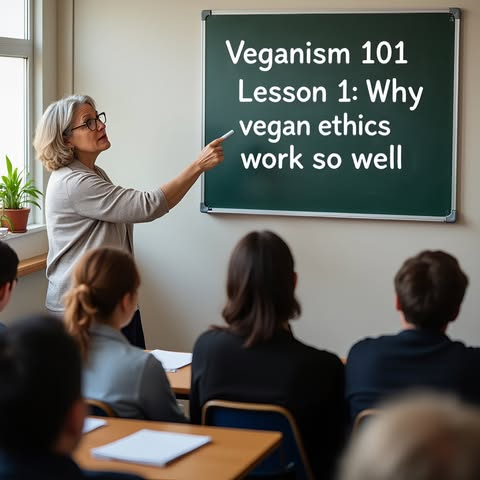
A recent surge in anti-vegan rhetoric may be contributing to an observed fall in popularity for veganism (though see here for a different perspective). While many critics might hail this as a win, we must be honest and regard that as a failure for both our human moral agency and animal justice. The more vegan ethics are rejected by everyday consumers, the worse our treatment of animals becomes.
At the heart of this critical outbreak appears to be two unrelated concerns – that veganism on average causes far more harm to other animals than otherwise and the problem of “toxic” vegans.
Let’s tackle these and see why neither is a knockdown for veganism itself and why critics are deluding themselves into believing that they are doing good when they are in fact bad faith actors. I’ll go further and suggest they are not honourable.
The first claim – that vegans are causing more harm to other animals – is a pretty odd claim. After all, veganism is committed to doing what we can to be fair to other animals, so by its very nature you’d imagine the ethics guide us to avoid using and harming other animals whenever we can. But there are critics who think otherwise.
Why?
Well, usually critics are really only making one claim – that more animals are killed to eat a vegan‐friendly plants‐only diet than an everyday diet. If – so the story goes – if you want to cause the most harm to animals then be a vegan and expect crops to be grown to feed you and see just how many wild animals are killed for your food. We’ve all seen the rant from John Dutton (played by Kevin Costner) in Yellowstone and repeated on the Joe Rogan show. What we should be doing is eating grass‐fed beef, where just one animal is killed for our food each year. Seems legit. Except… it’s not. In reality, nearly everyone is not doing that at all.
What’s really happening is that far more animals are harmed and killed for an everyday consumer’s lifestyle than for a vegan lifestyle. And that’s exactly what we’d expect to find, given what vegan principles set out to achieve. Of course, vegan principles are not directly trying to achieve “least harm”, but that IS the consequence more often than not. A vegan lifestyle will typically lead to far fewer animals being harmed than happens for most consumers’ lifestyles.
What about “toxic vegans”? To be honest, this is a very weak argument. I agree, some vegans can often be very unpleasant folk in online discussions and comments, but my observation is that they are hardly alone. A quick look through the comments on any Tash Peterson post on Facebook will illustrate that. But is that good enough reason to reject the value of veganism as a way to tackle animal injustice?
After all, if animals matter to you, vegan ethics offers the single best tool for making fairer and kinder choices when our actions affect other animals. In fact, so effective and comprehensive is vegan ethics that I suggest it would not be possible to form any other ethical framework that addresses animal injustice that would not itself either be identical to, or a form of, the vegan framework. So when someone says they reject veganism because some people are unpleasant, you know right away they aren’t serious in their concern for other animals either.
So where are we? Clearly, modern use of animals comes with a cost to the animals themselves, so wanting to do what we can when we can to mitigate that cost must be a good thing. Yet critics want us to believe that doing so is actually a bad thing (doing good is bad, they say); worse they seem to be saying we should feel free to use animals however we want. That just isn’t how ethics work and I suggest that critics who encourage everyone to ignore the value of vegan ethics are acting dishonourably.
Put another way, when folk profess concern for other animals yet reject vegan ethics, you know they aren’t serious. No, if they really cared, they’d adopt the ethics themselves and encourage people to apply them responsibly.
Bottom line is this. If you think animals matter enough to want to be fair to them in your actions and choices, then vegan principles are the best tool you have. Whether or not you choose to be a vegan, the closer you get to living vegan, the more you’ll be doing to tackle injustice to other animals.
Shouldn’t we all want that?
*************************************************
Don’t forget, no-one needs to be a vegan to adopt and apply vegan ethical principles in their daily lives to make a positive difference for other animals. If you’d like to know more, you can read my essay that offers a deeper dive into the meaning and application of vegan ethics at the link below:
Click here to access: Animals Matter – Veganism for Everyone (pdf, 466

