So Why Veganism?

Summary:

Long ago before people developed agriculture and civilisation, humans and other species shared the world as relatively equal participants in the enterprise of life. Veganism wasn’t necessary as we were all born free and able to pursue our own lives on our own terms. We changed all of this beginning around 10,000 years ago with the emergence of agriculture and later civilisation. The world of today is very different as a result. People now often use other species in whatever ways they wish, treating these animals as mere things to be used for our own ends. In doing so, we obstruct and prevent many species from the freedom to live their own lives. Other species exist to pursue their own ends just as we do. There is no reason to think that their wish to flourish is somehow less important than our own. While veganism wasn’t necessary in the distant past, today it is an idea that aims to restore some balance, indeed justice, to the relationship between humans and other species. All that veganism asks is that we make choices whenever we can that respect the rights of other species to live their own lives. In the end, veganism is about us more than it is about the other animals.

*****************************************************************************

The Full Story

In previous posts, I have described veganism as an idea about ethics – we should extend our moral consideration to include other species whenever we can. As I explain it, we can think of other species as having the same basic rights as humans and so, when it doesn’t intrude on our right to look after ourselves, we should treat other species accordingly. In this post, I’d like to explore where I think this idea comes from. Not so much in detail but rather as a general consideration of a fundamental change in our relationship with other animal species.

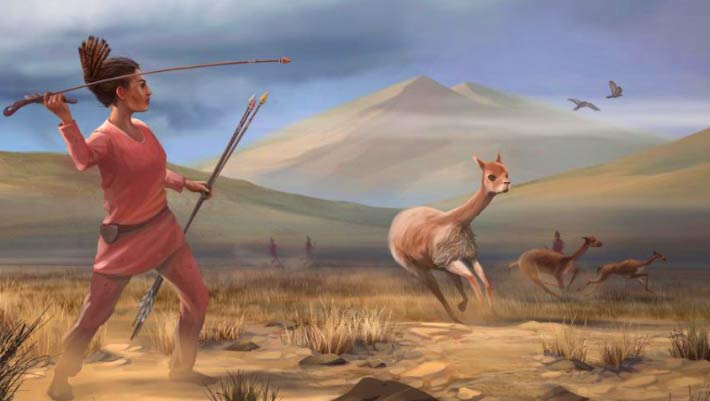
In the past – that is before the emergence of agriculture and settled, stable human cultures – there was no need for veganism. At that time, humans existed as an integral and relatively equal partner in the enterprise of life. Nearly all species were born free to make their own ways in the world and to live their lives on their own terms subject to the risks and constraints of natural living. In that world, humans depended on other species as natural resources available to them, much as did many other species. Using other animals for food, fibre, tools, etc has been an essential part of human culture for as long as there have been humans to have culture. For all of human history, it has been normal and natural for humans to use other animals in these ways.

However, human beings are a materially different species from all others with the capacity to affect the natural world far more than most other species. For much of our history, this effect was limited but nonetheless at times significant. Some of our activities may have led to noticeable changes, for example the use of fire to transform landscapes and the hunting – perhaps to extinction – of megafauna. Yet on the whole, we remained as we always had been, members of the natural community.

This changed around 10,000 years ago with the development of agriculture and later with the emergence of civilisation and more recently the use of fossil fuels for energy. Since then, we have seen a remarkable growth in both the scale of activities such as agriculture and also the size of the human population. Today, that somewhat equitable relationship with other species I mention above is very much out of balance. Our needs, wishes and preferences now impact almost every species on the planet. Nowhere is this more apparent than in the case of agriculture which has spread to cover much of the planet’s ice free surface and has affected ecosystems everywhere. We have demoted other species from fellow creatures with the right to pursue their own ends as best they can to nothing more than things, objects we can use as means to our own ends.

There seems to be a fundamental injustice in the idea that humans can use other species in the kinds of ways we so often do. Instead of sharing the natural world as relatively equal partners, modern humans dominate all other species in ways that substantially restrict their freedom to flourish on their own terms. We seem to believe there are no reasons to constrain where, when, how and why we intrude on the lives of all other species that share the world with us. We have become separated from nature, treating all other species as mere things to be used.

While veganism was not a concept necessary in the world of our distant ancestors, I believe that today it is an important idea about restoring some fairness – justice – to our relationship with the rest of nature. The reason it is important is that like us, other species have the right to pursue their own lives for their own ends and not merely exist to be means to our ends alone. All species have the fundamental and basic rights to want to flourish and take part in the world as free beings.

In the end, veganism isn’t only not eating meat or eating a healthy diet or saving the planet, though these are possible consequences. Rather, veganism is an idea about aiming by our actions to restore balance between us and the other species, a balance that once was a hallmark of how we fitted into the web of life.

That is why I think veganism just makes sense.

Is it Time to Focus More on People and Less on Vegans?

I have explained elsewhere why I think of veganism as an ethical matter. Some think of veganism as a diet or a means to improve health or to address climate change, but really these are simply strategies to an end which can be swapped out for other strategies if need be. However when considered as an ethical matter, veganism can never be diminished in its essence. I mean by this that veganism is about fair and just treatment of other animals and that is a constant of the philosophy. As it was defined in the early days, veganism is the doctrine that man should live without exploiting animals and that is its essence.

Of course here at Just Us Too we have a somewhat more modern take on that such that we see veganism as the core idea that we think other animals matter enough for us to have the moral concern to ensure that we are fair and just in our relationship with them. So that’s what veganism is really asking of us. That we make choices that help to keep animals free and prevent our unfair use and cruel treatment of them. We talk more about what this means in our other posts.

On these grounds, I think advocating for justice for other species is best approached from the perspective of encouraging people to act accordingly. In other words, advocacy might make greater inroads simply by providing information about how animals are treated unjustly, illustrating how we can prevent these injustices and guiding people towards more ethical practices.

In particular, I think we might do better to move away from the idea that by devoting oneself unswervingly to a very strict set of behaviours one can become “a vegan”. Pursuing the idea that someone should be a vegan entrenches the idea of a division, ie people are vegan or non-vegan. It also helps to precipitate and prolong divisive argumentation about whether one thing or the other is more ethical. On the other hand, eliminating this concept of being a vegan and instead encouraging the idea that there just are people who make ethical choices might reduce this kind of tribalism and even encourage a more positive general opinion about the idea.

Now, I am not suggesting abandoning the labels “veganism” and “vegan”. Instead, I think veganism is the best term for describing the idea of extending our moral consideration to include other species whenever we can. Promoting veganism as an idea about moral consideration and ethical practice provides a consistent foundation for advocacy and general adoption.

Insofar as the term “vegan” goes, I propose looking back to previous social justice campaigns in relation to human rights. In that context, particular labels were attached to advocates/activists seeking social change. Consider abolitionists and suffragettes. The general community didn’t think of themselves as such. Nor when slavery was abolished and women got the vote did people more generally become abolitionists and suffragettes. Instead, once change was achieved, all we had were people as members of the newly extended moral community.

I think something the same could apply to veganism, which after all is really the idea of extending the moral community to include other species when we can. Thought of in that way, a “vegan” might be an actual advocate/activist, someone who goes out of their way to encourage social change. On the other hand, people who are convinced and want to endorse the idea and change their ethical practice are just that. People within a more extended moral community.

Advocacy then is undertaken by vegans who promote veganism by education, illumination and guidance. People wishing to learn from these efforts and who wish to make changes for themselves aren’t vegans, they are just people. There is no need for judging people’s degree of vegan-ness, for gatekeeping the vegan community or for toxic debates about how evil or immoral others are.

We are already, most of us, vegan for other people. And in time, we might all be vegan for other species as well. What progress we can make towards this goal is worth celebrating.

A Possible Defence for the Moral Concern of Killing Rodents and Insects in Crops

I have talked about why I believe that veganism is a an ethical position aligned with everyday ethical views about how we treat others. I have also explained how on these grounds we can evaluate which kinds of food production are most ethical. I concluded that we are almost always better to farm only crops than to farm crops AND other animals.

Nonetheless, pest control in cropping remains a significant concern. Given that we very likely cause substantial suffering and death to invertebrate species in particular and that pest management practices are threatening many species with extinction, I think we have to give further thought to how the decision to grow only crops can withstand scrutiny.

The basis for offering moral consideration to other species really rests on sentience. It can only be the case that we have that kind of ethical duty to other species when we can be reasonably confident that they experience the world from a first-person perspective. That is, there is something it is like to be them. Perhaps we might even restrict our concern to those species that can feel pain.

Today, evidence strongly suggests that many invertebrate species are sentient and some may even feel pain. Given it is possible that quadrillions of insects are killed worldwide each year to grow crops, we seem to be causing considerable harm to pest species such as insects and I have argued that it seems wrong to inflict unnecessary harm and suffering on other species. Where to from here?

One option I will propose is that we take into account certain biological factors. The one I am interested in here is reproductive strategy. Species tend to be either K or r strategists. I know that this idea is less favoured these days as an explanation about survival strategies in species, but as a broad-brush consideration I think it still holds some value. K-strategists are longer lived, have few offspring, care for them longer and invest greater resources in their survival. K-strategists tend to be larger animals. An example is cattle. R-strategists on the other hand are shorter-lived, have many offspring, often invest little effort in raising their offspring and are smaller animals. An example is insects. Rodents are also r-strategists.

Consistent with the natural “intent” inherent in the evolution of these two kinds of reproductive strtagey, I propose that we owe a greater duty to individuals of K-selected species and a lesser duty to individuals of r-selected species. K-strategists tend to experience pain in ways that support behaviour adaptation and learning, leading to greater concern for how the self and any offspring go in the world. R-strategists may not even feel pain in some cases (insects) and often show less concern for individual experiences. As K-strategists hope to achieve species success from individual success, we can see why worrying about each animal as an individual is very important. R-strategists on the other hand achieve species success from an overall maximal reproductive potential – many offspring lead to many survivors, even if many die young (which they do).

At the individual level then, we owe a greater duty to K-strategist individuals than we do to r-strategist individuals. Just the same, in both cases, we owe a collective duty to the species to prevent unnecessary harmful impacts such as extreme thinning of populations and/or extinction. On that view, killing pest insects (and rodents) to protect crops may be defensible on practical grounds (we have to grow food to live and insects threaten our success) and on relative ethical grounds of least harm (the experiences of individual insects matter sufficiently less that we can ignore this concern for all practical purposes – we are doing less harm to kill r-strategist individuals than to kill K-strategist individuals).

However, our duty to the species and the environment is such that we cannot be indiscriminate in pest control when the results affect biodiversity, ecosystems and threaten species with extinction. We should encourage improved pest control techniques in order to minimise risks to insect populations and prevent species extinction, but not feel that we have to apologise for killing individual r-strategist pests.

The problem for veganism of crop deaths

Veganism is an ethical position – the idea that we extend moral concern to other species. Simply put, we should want other animals to be free and in charge of their own lives without being treated badly by us, as much as is possible. These are, if you like, our moral duties to them.

As I have suggested elsewhere, these duties mirror the duties we have to other people as explained in the UN Universal Declaration of Human Rights. We can therefore say that we should treat other animals as though they have the same three fundamental rights as expressed in Articles 3-5 of the Declaration:

  • The right to life and liberty (that is, to be in charge of their own lives and not to be exploited)
  • The right not to be held in slavery or servitude (that is, not to be owned and used as a commodity)
  • The right not to be subjected to torture or to cruel, inhuman or degrading treatment or punishment (that is, not to be harmed unnecessarily)

These three principles should govern our relationship with other species. As a consequence, the moral case for not farming animals like cows and pigs emerges from the first two of these principles. That is, we have a duty to respect their right to be free and in charge of their own lives whenever we can. They should not be treated as commodities and used as a means to our ends, whenever we have the option not to.

According to our third principle, we also have a duty to prevent other beings from experiencing unnecessary cruelty. Generally speaking we believe we owe this duty to each individual and that’s why, for example, animal welfare laws exist. While animals continue to be treated as property and used by us, we still have an ethical duty to ensure they are afforded the best possible welfare under the circumstances.

A criticism often raised when we talk about veganism in the context of food production is the killing of pest animals in cropping. Critics say, for example, that millions of small animals like mice are killed by various practices. Even worse, trillions of insects are killed by the use of pesticides. Don’t we owe the same duty to these animals as we owe to the farmed animals? If not, isn’t it hypocrisy to worry about the farmed animals but not the wild animals that we harm?

We can examine this problem in terms of our three ethical principles. Obviously we have to produce food and we can be certain that as with everything else, we cannot avoid causing some harm to other species. But how much does food production transgress our principles and can we align food production with vegan ethics?

In the case of farming animals, we seem to be violating all three principles. That is, farmed animals are owned and exploited, they are not free and they are harmed. Perhaps we could overlook this if we had to farm animals, but clearly we can grow plants for food instead, at least much of the time.

If we choose to grow crops for food rather than also farming animals, we seem likely to be violating just one of these principles when we cause harm and death to pest animals. How so? First, the wild animals managed as pests are free. Secondly, we have a right to protect ourselves; that is, ethically we may kill another in self-defence. Pest animals threaten our well-being by attacking our food supply and may not be reasoned with so we are within our rights to kill them. In the end, it seems we might only be guilty of causing unnecessary pain and suffering. While this is still an important problem, as consumers we may be hard-pressed to either buy foods that aren’t the result of such practices or influence how farmers treat pests.

It seems therefore that it is a lesser ethical failure to only grow crops for food than to grow crops AND to farm animals. Nonetheless, we might hope to buy plant-based foods that require minimal pest management and/or support pest control practices that minimise harm to pest species.

The Philosophy of Ethical Veganism Explained

My explanation of just what ethical veganism really is.

Summary:

Veganism is an ethical position, the idea that we extend moral concern to other (sentient) species. We are already vegan to other people, all that is in question is how much we can be vegan to other species.

Over thousands of years humans have developed moral principles about how to live well together. Some of these principles have been described as human rights and the Universal Declaration of Human Rights sets out a generally agreed set of such rights that can and should apply to all people in any society.

The basic, or foundational subset of these are the three rights described at Articles 3-5 of this Declaration. These are the rights to one’s own life, the right to be free and not treated as property or exclusively as a means to an end, and the right not to be treated cruelly.

There are reasons to believe that these basic rights can be extended to many other species. Simply put, we should want other species to be free and in charge of their own lives without being treated badly by us, as much as is possible.

While human rights are often protected at law, animal rights are not. Vegans therefore are people who behave as though these rights for other species are protected. This makes it very easy to work out what to do whenever we can, even if it turns out that the best that we can do can never eliminate the use of other animals for human ends.


The Full Story

Humans have long been engaged in an ethical project (cf Philip Kitcher). Today it is accepted that people deserve certain moral considerations such as to be free to conduct their own lives, to not be tortured or subjected to cruel, inhuman or degrading treatment or punishment, to not be held in slavery, and to have their interests protected at law. People also deserve to be treated justly. Justice is understood to mean fair treatment and for the victims of unfair treatment to be protected (and perhaps for the perpetrators of unfair treatment to receive punishment).

These ethical principles have been embedded in what are known as human rights. In particular the UN’s Universal Declaration of Human Rights sets out in 30 articles the fundamental human rights to be universally protected. Generally speaking rights and just treatment are confined to our species.

Ethical Veganism is the idea that the principles expressed by three of these fundamental rights – Articles 3-5 of the Declaration – should be extended to other species whenever possible. Vegans believe that we owe a moral obligation to other species to respect their rights to their own lives, not be enslaved and not be subjected to cruel treatment or torture, whenever we can.

This makes it very easy to evaluate what choices and behaviours we should enact in regard to other species. It also offers a clear distinction about those who endorse veganism and those who advocate for animal rights.

Human rights are protected in law – legislation in many different countries seeks to constrain people to observing these rights. Animal rights however are not well protected in law. Because this is the case, people who endorse veganism behave as though those rights are protected, while animal rights advocates also agitate to have those rights protected in law.

While people who endorse veganism choose to act as though animals’ rights are protected, their behaviours will depend to some extent on circumstances. This means that in some cases, animals may still be used and harmed for human needs.

For example, someone living where access to food is limited might own animals from whom food and fibre is collected or obtained. People living in traditional communities with limited access to modern goods and services might continue to hunt other animals for food and fibre. Animals might be used in the pursuit of medical treatments where the outcome can be shown to benefit many.

Generally speaking however, when one lives where circumstances permit then one should make choices that aim to respect and protect the rights of other species. In other words, it is up to the individual how best to act so as to protect other species. For example, they may choose to eat a plant-based diet.

People sometimes argue that farming animals as well as growing crops for food might be preferable to growing only crops. For example, they describe regenerative farming as the most ethical option. It seems to me that this argument is open to debate on empirical grounds, given there is some dispute about the overall efficacy of regenerative agriculture. I cannot adjudicate on that. However, as a broad stance based on my explanation above and within the context of the idea that other species deserve basic rights, it should be clear that animal farming is not ethical.

Our ethical concern in regard to animal farming emerges from its failure to observe the three principles above. We might be able to make farming relatively cruelty free, but we cannot make the animals free or unexploited nor prevent their ultimate harm. Therefore, while minimising pain and suffering in animal farming is consistent with our duty to prevent cruelty, animal welfare in the context of human use of other species falls short of our overall ethical obligation.

Because animal farming fails to fully respect the rights of other species as explained above, people who endorse veganism as an ethical stance will more than likely choose not to buy products derived from animal farming and will prefer to buy and use goods that have been produced without the use and exploitation of other animals, whenever they can. Of course, in the broader sense it might turn out that it simply is not possible to prevent the use of animals completely, if at all, because that is just the way things are. We may simply have to face the fact that whatever ethical failure accrues from this, it is the best we can do in the circumstances.

A Brief Account of Consciousness

Summary: Consciousness (experience, awareness) has long been a mystery. It has been called the “hard problem” because it has successfully eluded explanation for centuries, however I believe that modern accounts have gone a long way to dispelling the mystery. It seems that the key to understanding consciousness may be to regard our experience not as that of a discrete observer but rather as a model of our relationship to the external world. The perceiver is inherent to this model.

By way of example, we tend to think that when we see an external object we are inside our heads looking at some kind of image. Instead, it seems more likely that the object we experience is simply a description, a logical carrier of information about our relationship to that external object. We have a constellation of such descriptions, tied together by meta-descriptions. One such meta-description might be the feeling we have that we are inside our heads. We can act upon these descriptions, including reporting upon them. When we say “that ball is red” we are reporting upon information contained within the descriptions our brains compute from sensory input and stored concepts.

The world as we experience it is a virtual world, a description that is only as complex as we need to act into the external world. It may not always represent the actual world but to us, it IS the world.

***************************************************************

An enduring mystery is that of consciousness or awareness. We believe that we are aware in a particular way, that “we” are in our heads. This is because we have experiences and can talk about them. We see colours (eg red), we feel pain and we can be happy or sad. Strangely however we cannot really say what red, pain or happiness actually are – the best we can do is agree that we each see a red ball when a red ball is present. That ball seems to us to be out there but obviously it isn’t. It must somehow be in our heads, like a photograph or movie being shown for us on the screen of our minds. Someone, it seems, is inside our heads, in some kind of inner space, watching the movie of experience.

This someone is what we might think of as the soul or at the very least as an observer – an actual thing that is separate from yet co-existing with our physical body. But the problem with thinking this is that it is a non-explanation. If an internal observer “sees” our experiences, then how does this observer do that? Could there be an observer inside the observer? Maybe, but then we seem to need a further observer and so on. We can never bottom out into a true physical explanation of what the observer is.

The philosopher Daniel Dennett is famous for his dismissal of this kind of idea. He tells us that there can be no Cartesian Theatre, no inner screen on which the movie of experience plays for our observer. He takes the view that we are misled somehow, that our experience is in some way an illusion. He doesn’t mean by this that we are not having experiences – after all, we describe our experiences by what they signify (the red of the ball, for example). Experiences exist.

However, while experiences exist, does it follow that we are indeed inside our heads, contrary to Dennett’s claim? Or is it the case that other than the brain doing stuff, there is nothing else happening? After all, as physical systems brains just do physical things, so unless something non-physical is happening we aren’t really in there. Perhaps we simply do not have a soul after all – maybe the truth is that no-one is home. I wrote about this in my short essay, “Do animals have souls?“, where I say that my answer to this is that no, we are not really home and we do not have souls. I should add the caveat though that in one very real way there IS something it is like to be us. How does this happen if we agree that there can’t be an observer inside our heads?

The most likely explanation is that experience – the “what it’s like” – just is how brains compute (manipulate) information in order to produce behaviours. The idea that brains compute information is known as computationalism. There has been plenty of criticism for the idea but it remains the dominant paradigm to explain cognition and by extension consciousness. I tend to think that a fundamental capability of material universes is computation – the right kinds of systems can gain information by manipulating other information according to some rule (ie logic). Brains do this.

Consider a sort of paradigm example. Light is not really illumination or colour – it is a narrow frequency range of electro-magnetic radiation reflected from or emitted by material objects. Sensory apparatus can detect light and use the resulting interaction between light and the detection of light to gain information about objects. In such a manner brains can use this information along with a range of stored sensory and affordance data to model the world and relations with the world. The things we “see” don’t really look like anything at all out in the world; what we see is entirely an abstract construction of our brains using the information rendered by the interaction between light and our eyes.

The usefulness of this kind of abstracted information is obvious – it facilitates  behaviours. More complex behavioural possibilities are uncovered both by environmental conditions and improved detection/processing/actioning capabilities. In the same way physical forms are optimised by evolution to better suit adaptation to changing environments so too is the computability of information derived from interactions between the organism and its external and internal environments. In a very real sense, the “instruction set” for programming brains/nervous systems is derived evolutionarily over long stretches of time.

The end result is that in our heads are no more than the models we use to direct behaviours and the objects in these models (for example, red balls and “me”) are more like organisational artefacts – they stand in for (represent) how we use information to direct internal activity to generate external behaviours. Our brains construct a virtual world using information sampled from the outside world.

Put another way, our experiences are not OF the world, they ARE the world. And in this world is a kind of control model – a sense of self that coordinates and modulates behaviour based on perceptual information prioritised according to behavioural goals. This self is in effect a control model that ties together the artefacts of these processes and enables us to observe, monitor and report upon progress. Michael Graziano has offered a compelling and cogent explanation for how attention mediates this control model when he describes his Attention Schema Theory.

You can see from this that when I agree that consciousness is an illusion, I don’t mean we are not having experiences. Rather I mean that our experiences are not really an inner being “seeing” and “hearing” things and having a genuine “self”. Sensory perceptions are abstracted informational objects – objects of organisation and process. The different sensory modalities simply wrap up the information in handy codes. A red ball (vision) contains information that is pared down for easier manipulation – it isn’t the state of all the bits of the brain but is rather an abstraction that contains shape, colour, location, distance and so on upon which we can undertake ongoing behavioural computations (eg how to catch the ball). The sound of a bell is the same thing but for sound waves (audition). The underlying brain cells are the same and they do the same things, but the information being manipulated is different as are the affordances offered. I think that J. Kevin O’Regan has explained this idea very well when he describes his sensori-motor theory in his excellent book “Why Red Doesn’t Sound Like A Bell“.

Now, can other computational systems have experiences? I am inclined to say yes. All computations that manipulate information may be accompanied by some kind of “what it’s like”. However, it seems likely that the computational devices we have built are limited by the narrowness of their functionality and a paucity of broadly integrated complexity (eg complex feed-back and feed-forward circuits). More than this, I tend to think that without a particular kind of memory system, it seems very unlikely that these computational activities have any kind of awareness, much less self-awareness.

That said, as complexity increases so too does the potential for experience and therefore computational devices that mirror the circuitry of brains and incorporate the right kinds of memory should have experience (recall that consciousness is a kind of logical information space in which relationships are modelled). In particular, as memory morphs into the kind of global workspace (for want of a better description) as outlined by people like Baars then the experiences become accessible to the system as a form of awareness. Very complex systems with the right system capabilities would be aware. Tononi’s Integrated Information Theory is probably very much on the right track in this regard.

While consciousness as experience might be explained as the product of brains computing information, it is unlikely that the unitary everyday experience we enjoy is directly affecting behaviour. The reason for this is that it seems to come too late. The consciousness we have seems fully formed and informative yet to process perceptual input, access stored content, create a virtual world of experience and then to decide responses takes time and time is of the essence for creatures in the world.

It is more likely that our brains are constantly predicting and revising those predictions as it shapes behaviour to external circumstances. This may be accompanied by some kind of what it’s like experience, but this is likely not to be what we call everyday awareness/consciousness. As the brain computes various scenarios and generates draft narratives of what’s happening to us, behavioural plans are created, discarded and executed. All in tiny fractions of time, such is the computing power of the brain. Only once behaviour is complete is it likely that a full and final draft (as it were) is produced for storage in memory systems. This final draft is a pared down, information rich abstraction of what just happened and is probably most useful for learning. My best guess is that it also informs ongoing processes and behaviour in a complex feedback/re-entrant looping mechanism.

While ongoing internal brain processes may be manipulating informational objects, true conscious experience – our unified unfolding narrative – is more likely to be an after the fact construction. This is why I see memory as critical to enjoying a rich conscious experience. In memory, the abstracted information that describes external world, behavioural responses and functional outcomes is stored for learning and ongoing comparitive feedback. I suspect that our moment by moment awareness of the world is in fact a memory function.

It is in this sense that some researchers have proposed the hippocampal formation as critical to these activities and I think this makes sense. While I simply don’t know enough to say yay or nay, I think propositions such as those of Ralf-Peter Behrendt and Matt Faw may be on the right track. Faw’s suggestion that moment by moment experience is the first instantiation of a memory seems to fit the bill. Even if not exactly right, this proposition seems to give us grounds for viewing everyday consciousness as primarily a memory function.

Placing this into a simpler explanatory framework, brains have evolved to interpret and manipulate information about the body and the external world in order to manage behaviour. The world we experience is a kind of “logical space” in which information is abstracted into a model of how the brain processes and organises that information and the behaviours available to be enacted.

Essential to the complete experience that complex organisms like humans enjoy is a memory system that permits a recurrent, re-entrant process of remembering moment by moment, informed both by prior stored concepts/experiences and predictive refinements in order to model relations betwen the organism and the external world. Such models facilitate increasingly complex and dynamic behavioural responses.

In the end, we are simply very good natural simulations.

My vegan elevator pitch

“Veganism is a philosophy and way of living which seeks to exclude—as far as is possible and practicable—all forms of exploitation of, and cruelty to, animals for food, clothing or any other purpose; and by extension, promotes the development and use of animal-free alternatives for the benefit of animals, humans and the environment. In dietary terms it denotes the practice of dispensing with all products derived wholly or partly from animals.”  UK Vegan Society

I wrote a longer piece about this recently, but this is meant to be my “elevator pitch” version. Cutting to the chase, rather than being only a diet or environmental fix or even a rigid ideology, I consider veganism to be a way of looking at the world which is essential to my personal moral outlook. This is because veganism is consistent with everyday ideas of right and wrong – we already believe all that it asks of us, we just need to extend those beliefs to include other animals.

It works like this.

I think of veganism as how my choices and actions affect others. I suppose we can boil it down to the Golden Rule – treat others as you’d like to be treated yourself. If we try to do that in our relations with other people and other animals as far as possible… well, isn’t that “veganism”? Veganism just is what it means to do your best to be good to others. We are already vegan as far as other people are concerned, so how hard can it be to extend this attitude to include other animals?

Mind you, we can’t always live our ideals; sometimes circumstances dictate otherwise. For example, normally one ought prefer not to kill another person but one must in wartime. We can only do our best. Our best, I suggest, is something of an ongoing project for most of us. For me, veganism is how I see that project.

All veganism asks of me is that I do the best I can being the person I am in my particular circumstances, as long as my aim genuinely is to do well by others as much as I can. In the case of other animals, I want to take into account how my choices and actions could affect them for the better. My situation may not mean I can be my best at all times, but I still hope to do the best I can when I can. All this requires is an open mind and the willingness to do things differently when I see a real benefit to others.

That right there is veganism as I see it.

*************************************************************************

A Practical Guide

A couple of people have said to me, OK, that’s all well and good but what are you really saying? I see what they are getting at. My pitch above is meant to outline why I think veganism makes sense and can be taken on board by anyone at all. It’s meant to defuse the argument that veganism is a rigid diet that is too hard, perhaps even dangerous, to follow.

I am saying that what counts is your own personal commitment to treating others well and that I believe other animals should be included in that commitment. This is not strictly how veganism is defined, so I am only offering up my take on this. However, I think my take on the matter can be quickly and easily embraced by most people because it only demands that you do what you think best.

It should be clear that I don’t much endorse the idea of “going vegan” or being a vegan; what really counts is your own willingness to question the way we do things. I call this embracing vegan ethics. How far you go is up to you but the idea is that you be open to finding out more about how we treat other animals and thinking about how you could help to change the bad things we do. It doesn’t necessarily mean never using or harming or killing another animal unless that’s how far you want to go. Most purist vegans do go that far, but I suspect many people would not. That’s OK. You can still be “vegan” by my definition. Because in the end it’s your personal choice on how best to act.

I classify my interpretation as essentially vegan rather than say reducetarianism or ethical omnivorism because I am looking to the full range of our relationships with others and because I remain focused on how my choices affect others. Ethical Omnivorism for example seems mostly confined to our food choices and seems not to come with any built in constraints on how far we go.

Someone embracing vegan ethics in this way might take small practical changes to how they live that are consistent with the goal of doing good by others. Another might go much further and become a purist vegan and animal rights activist. It’s up to you. Your journey may never end because we can always learn more and do more.

So, here are some practical examples.

My own personal situation came about when I found out how we treat pigs in the food system. You can read more about that here. These days, my wife and I eat a mostly plant-based diet. I don’t die in a ditch if my food is cooked in a pan along with meat, I do eat oysters and mussels, I have no problem with eating insects. I am not sure about wool and cotton, but we aim to minimise the number of clothes we buy. I am OK with eating meat if someone offers me some but I explain why I’d prefer not to.

Chickens and pigs are very badly treated in our food system. Choosing never to eat chicken or pork from commercial intensive systems is a great way to contribute to a better food system. You may even prefer to never eat chicken and pork at all. Here is an example of a farm where animals are raised with high welfare: http://jonaifarms.com.au/

Many animals can be harmed in the cosmetics industry, To help reduce this problem, choose cosmetics with the leaping bunny logo on them. The Leaping Bunny Logo is the only internationally recognized symbol guaranteeing consumers that no new animal tests were used in the development of any product displaying it. The Logo can be seen on packaging, advertising, and websites for cosmetics and household products around the world. There are other similar logos, to find out which ones you can trust, please visit this website: https://ethicalelephant.com/cruelty-free-logos/

If you support charities and worthy causes, consider supporting a charity that works to better the lives of other animals. You can choose one whose work or values agree with you. I volunteer to help Animal Aid Abroad, an Australian organisation whose goal is to help every working animal live a life free from suffering and to be treated with respect and compassion.  https://www.animalaidabroad.org/

Yolanda is a sheep and cattle farmer. She believes in ensuring the best possible welfare for her herd and she is committed to protecting them as much as possible from the harsh realities of nature and to give them a fulfilling life and a good death. Yolanda is dedicated to constantly observing and checking them, often dragging herself out at all hours and in all types of weather. She is well known for bringing in the sick or abandoned to protect them from predators, always choosing to ignore the little voice that often says “it will be right till tomorrow”, no matter how exhausted, cold or hungry she is. The thing is, people eat meat and we farm animals so there are people like Yolanda out there farming. None of them have to go the extra yard so it’s wonderful to see someone who does.

To join in a conversation between farmers and vegans, you could join the Farmers and Vegans Discussions Facebook group. This is a small but growing group where people can find out more about farming and talk to both farmers and vegans about how our food system works. https://www.facebook.com/groups/296536041626729

Why I think veganism makes sense

Veganism – once a fringe concept – has become increasingly mainstream in recent years. However, with this has come a change in the public perception of veganism. Originally an essentially moral philosophy, I think many people now see plant-based and vegan as meaning the same thing (a diet) and they see it in terms of personal benefit (health, environment, climate change). That’s fine, I guess, but I’d rather retain the idea that veganism denotes a moral attitude or stance. For me, veganism isn’t anything special – it’s just my everyday moral attitude extended to include other animals as much as I can. That’s about it.

In practice, just like all our other moral stances, how I behave depends a bit on circumstances, convention and evidence. I do my best to do what I think is right but what I do may not be the same as you. I may be more or less fastidious in my moral actions than you. I think that’s how the world works – we work out a general idea of right and wrong and then we each tackle that as we think best.

When it comes to veganism, I probably take what is broadly a welfarist position. I guess I boil it down to caring or being kind. If I can avoid it, why would I harm another creature? I am pretty sure that’s the essence of the Golden Rule. So, my moral stance in the world just is that. However, the world itself isn’t kind or just, that’s just a thing we do. The result is that we can’t be perfect and we can’t always be entirely true to our own moral convinctions. By and large, I think, we just do our best.

If it turns out that someone has to eat meat for good health or because they don’t have access to other decent food, I don’t think that is a bad thing. If someone must use another animal for their own ends, for example an assistance dog, that’s just the way of it. But within that there is no reason still not to do the best we can for the animals our presence effects. Hopefully, we can learn more and use that knowledge and our ideals to act well. That’s what I try to do and it influences the choices I make.

I eat mussels and oysters. I don’t mind eating a piece of meat or whatever if someone offers it to me. I don’t even have a problem with killing and eating animals when it is necessary. I am not that far from ethical omnivorism in dietary terms. Except that I think things like that – or reducetarianism, for example – are largely self focused and I’d rather be a bit more other focused. This might not be what a vegan purist would think is veganism, but it is my personal moral stance, deeply informed by vegan ethics.

And here’s the thing. I don’t see why that means that everyone else cannot do the same. Why, on this flavour of veganism, can’t everyone be “vegan”? In the end, it’s no more than following your existing moral instincts and doing your best for other animals – people included. If veganism is a moral stance, essentially everyday morality, then it follows anyone can be vegan. Farmers included. It’s not clear to me why everyone isn’t!

My point here is that if veganism really is just everyday ethics then it can be integrated into everyday behaviours and choices. Seen as a sort of continuum of moral attitudes that may extend to more purist ideals but which nonetheless remains accessible to common ideas of right and wrong it is possible veganism could be taken as a default stance, rather than an object of opposition and derision. In such a light, veganism is understood and practised just as we tackle all other ethical issues – as best we can with the people we are in our particular circumstances. One might take a strong position on this and become an animal rights activist, another might simply make what they think are the best choices in the things they do.

Such a view of the world can then be informed by actual empirical matters as well as personal circumstances. So long as my interest is to do my best for other animals, the stance I settle on is mine alone and can be refined as better information becomes available to me.

Put another way, for me the goal of veganism as a moral stance is that our ethical attitude to other animals mirrors our ethical attitude to other people. We aim to do our best. Circumstances might mean we can’t apply our ethics equally as well for other animals as for other humans, but so long as we take the same strategy of regarding others’ interests and well-being as important, then I think that’s all we can ask of veganism.

Would a global plant-based diet really cover the world in crops?

It’s not uncommon to hear people pointedly suggest that a vegan diet (that is, entirely plant-based) would be bad for the world because it would mean more crops over more land area. These people, often farmers, say that plant-based diets require vast areas of land covered in monoculture crops, the argument being that this is bad for the environment, limits biodiversity and encourages the use of artificial fertilisers and various pesticides etc. They point to vegans needing soy for tofu and milk, almonds for almond milk, avocadoes and quinoa and so on.

The trouble with this argument is, I think, that it is rather misinformed. Right now, there are very few vegans in the world, perhaps no more than 2% of the global population or less. Of course, many people are turning to plant-based diets for a variety of reasons and  even omnivores are buying plant milks and increasing their vegie intake in an effort to be healthy. Nonetheless, given the vast amount of meat eaten in the world and the extensive nature of animal farming, the real world effects of these trends are vanishingly small when compared to the impacts of everyday agriculture at the global scale.

On the other hand, vegans like to point to animal farming as having major negative impacts on the world. They note that about 70% of all the soy grown is for animal feed and that overall, perhaps as much as 50% or more of all cereal grains are grown to feed animals. On top of this, nearly 85% of all farmland is used to raise animals. 

What is the truth? Well, it’s not that easy to tease out. But at a sort of generalised, indicative level, some things are clear. The first is that the vast areas of monocropping are not the fault of plant-based diets but rather are the result of what all of us are doing. Secondly, right now plant-based diets aren’t really making much difference to anything. Not at the global scale, anyway. And thirdly, the impact of animal farming is truly extensive.

All of that said, I wondered at one simple question. IF the world went plant-based tomorrow and animal farming (and seafood eating) stopped entirely, would the world have more land under crops? The answer, it seems, is no. In fact, it most probably would have less. Eliminating animal farming would probably mean two things – first, a LOT of land available for rewilding or other uses, including the growing of crops for food and secondly, there would be less land covered by monoculture cropping. Mind you, this latter claim is not as bold as it might first seem.

How do I come to this conclusion? Read on. 

The first thing we need is a baseline. According to the “Our World in Data” website, there are about 1.65 billion hectares of crops in the world. Of this, the main crop types are:

Cereals (eg wheat and rice): 700 million hectares.
Coarse grains (eg maize, barley, sorghum etc): 350 million hectares
Oil crops (eg palm, soy, canola etc): 300 million hectares
Pulses: 100 million hectares
Tubers, fruits, vegetables: about 80 million hectares each
Nuts: about 20 million hectares

Clearly, cereals such as wheat and rice dominate (wheat alone uses somewhere around 250 million hectares globally). The next largest crop type, coarse grains, are largely a food source although in the OECD they are used primarily for animal feed (perhaps as much as 60-70% of all such grains grown in the US are for animal feeds). Oil crops produce cooking oil as well as food ingredients, biofuels and some industrial applications.

One of the interesting facts we learn is that while vegans often claim that 70-80% of all soy is grown for feed, this isn’t strictly true. In fact, almost all soy is grown for human uses. What is happening is that most soy is grown to service two markets and what a grower is interested in is the prices at market. At the end of the day, around 87% of all soy grown is crushed for oil for human use in cooking, biofuel and industrial applications. Of that 87%, about 20-30% by weight is recovered as oil and the residue, 70-80% by weight, is used as meal cake for animal feed (the latter is highly sought due to the optimal protein profile). Just 7% or so is grown directly for animal feeds and around 6% for human food. The remarkable growth in soy however is driven by the demand for animal feed (in other words, other oil crops are grown less and soy grown more, so it’s relative proportion of the total mix of oil crops has increased). Today, there is around 100 million hectares under soy globally, including quite a bit of South America.

The second thing is that of the coarse grains, some very large proportion is used or grown as feed. Corn, for example, is largely grown as feed or biofuel stock in the US. While grains such as maize and millet feature heavily in diets is poorer nations, at the global scale it seems that other uses are perhaps as important. Somewhere between 30% and 50% are used as animal feed (and perhaps another 10-15% for biofuel and other industrial applications). On this question of food, quite a bit of wheat also services the animal feed industry (for example, of domestic uses for wheat in Australia, about 60-70% is for animal feed). Globally, it is possible some 10-20% of wheat is grown for feed, however it isn’t clear just how much. Wheat IS primarily grown for food, but poor quality yields and residues are also sold to feed. I have estimated about 10% directly grown for feed.

Current vegan demand for various foods simply doesn’t register at this scale. The biggest demands are clearly human food first (ie everyone, not just vegans) and livestock feed. From this it is clear that almost all of the land under crops is due to general human demand, whether that be for food, animal feed, oils, biofuels and so on.

To ascertain the effect of removing animal feed from the equation, I followed this method. First, I calculated how much land is likely to be freed up once demand for feed is removed. I am not concerned with what happens to pasture or grazing land, just the question of land area under crops. Then, I calculated how much land would need to be devoted to crops to replace the lost food (in this, I am assuming seafood is included in the various numbers I uncovered – this may be an invalid assumption). The difference between these two results gives us the actual effect.

So, let’s look at cropland saved from the elimination of animal feed.

Some large proportion of all wheat grown is used for animal feed, however this isn’t all derived from wheat specifically grown for feed. So determining just how much might be saved by no longer needing wheat as feed is not easy. I will use 10% but could be persuaded it is more. 10%x250 million = 25 million hectares.

I have accepted that about 30% of all coarse grains grown globally are used for feed (this is somewhat debateable as I said, but most sources agree that it is somewhere around that value – those that suggest it is as high as 50% are including wheat in the calculation). If so, 30%x350 million Ha = 105 million hectares.

Oil crops are used for cooking, biofuel and industrial applications. I have estimated about 100 million hectares under soy, the balance (200 million Ha) is a mixture of other oil crops. If soy meal was no longer marketable, it is likely the market would swing in favour of other oil crops such as palm oil due to the greater yields per hectare. Is this really likely? I suspect so, but the extent to which this might happen isn’t clear. I am going to assume that about 50% of all soy crop would be replaced by palm crop.

87% of soy is used for oil and feed, assume 50% replaced by palm. This would save around 34.5 million hectares (ie about 34.5% of all soy grown). Saving = 34.5 million hectares.
7% of soy is used directly as feed, so that is an upfront saving. 7%x100 million = 7 million hectares.
6% of soy grown (about 6 million hectares) is directly for human food but this would remain so it won’t represent a saving..

Total reduction in area under soy comes to 41.5 million hectares.

Now, some might argue that by eliminating meat we would substantially reduce the demand for oil in cooking. I don’t think so. Oil is mostly used for frying, baking and as an ingredient. Baking and ingredient use should remain the same. As for frying, I see no reason to expect that the profile of food consumption would change substantially – that is, people would still eat fast foods, eat in at restaurants and enjoy home cooked meals and barbecues. The emerging market for “fake” meats suggest that to be the case (eg plant-based burger patties, pretend chicken, fish and the like). And of course, french fries would remain in huge demand. So I have allowed no offset for a reduction in oil demand.

The total reduction in land under crops comes to 171.5 million hectares. If however we use 50% as the extent of land under coarse grains used for feed, this increases to around 240 million hectares.

Total reduction = 170 million hectares (240 million hectares)

Now, we need to know how much extra plants we need to grow for human food. Here, I wasn’t certain how to proceed. However, the loss of meat primarily represents a loss of protein. This does have to be made up, so I have decided to use protein as the overwhelmingly principle replacement food source. That means we’d replace meat with high protein crops such as pulses and legumes. Now, we know that Westerners tend to vastly over-consume protein but in poorer countries the opposite is true. Taken as a global average, I think this comes out about even so the best statistic to use is the FAO’s estimation of average protein source by type. Those numbers are: 57% from plants and 43% from animals. Using this suggests we need to grow enough high protein crops to generate 43% more protein.

Also averaged globally we have:

Weight for one person: 62kg
Daily RDI for protein: .8g/kg
Global population: 7.8 billion.

An average person therefore needs 50g of protein daily, or 18.25kg per year.
Global protein demand = (43%x18.25kg) x 7.8 billion = 61 billion kg annually.
The best plant sources deliver about 20% protein by volume, so 5 x 61 billion = 305 billion kg
Crop yields average about 2500kg/Ha, so 305 billion/2500 = 122 million hectares.

Total needed = 122 million hectares.

Our final result then is:

Saved = 170 million hectares (or, possibly, 240 million hectares)
Needed = 122 million hectares

Overall reduction = 48 million hectares (or 118 million hectares if it really is the case that 50% of the area under coarse grains is used to grow feed). This represents a total reduction of all cropland area of some 3% (7%). Is this at all close? Well, a recent study concluded that if all the existing cropland area was turned over to human food, we could feed another 4 billion people. On the basis of my numbers above, 4 billion people need about 29 million hectares of foodcrops for protein plus perhaps about the same again for the balance of their calories. That comes to somewhere around 60 million hectares, so it looks like my numbers are in the ballpark.

All of this said, it’s worth noting I used a recommended daily intake value for protein requirements. Globally, people tend to over-consume protein when they can get it and as the world’s population gains better access to food, overall protein consumption is increasing. Would it be any better under a plant-based agricultural system? Sadly, I suspect not, so the figure for land needed above could undersell the true situation by as much as 50-100%. If it turned out I have under-estimated by say 50%, then land needed would be around 180 million hectares leaving us in balance – no area gained or lost.

What have we learned? That the vast areas under monoculture crops today aren’t the fault of plant-based diets but are rather due to the system we have and the human demand that we have. Replacing the global diet with plants alone could reduce that area by somewhere between 50 and 120 million hectares but that does seem to depend on people not over-consuming as they do right now. The take away from this might be that replacing all the animals we eat with plants may not make as much difference as people think, at least not insofar as the problem of large areas of monoculture cropping. Something else would be needed.

Do animals have souls?

Many people believe that they have a soul, an inner being which transcends the physical nature of our world. Perhaps it even transcends death. Some also believe that other animals have souls as well.

But what could a soul be? It seems strange in this very physical world to think of it as an ethereal, largely undetectable inner “self” yet we are aware of the world in much that way – as an ethereal yet undetectable “consciousness”. While we may be tempted to think of the soul as a kind of inner person or a spirit being or some kind of inter-dimensional shadow, it is the fact that we are conscious – aware – of the world and our lives that leads us to think we have a soul. Many think it is this conscious awareness that is the everyday manifestation of our soul. It is the sounds, colours, feelings and thoughts we experience that makes up our conscious awareness of the world and in the absence of a good explanation for how we can do this it seems reasonable to think that there IS no explanation – this is just what it is to have a soul.

Of course, this is a bit of a non-explanation when considered from an empirical (scientific) point of view. Trying to ascertain what this inner being (consciousness) is has occupied enquiring minds for thousands of years. So difficult has the problem been that the term “the hard problem” was coined by philosopher Geoffrey Chalmers in 1995 when he wrote that “the hard problem of consciousness is the problem of explaining why and how sentient organisms have qualia or phenomenal experiences—how and why it is that some internal states are felt states, such as heat or pain, rather than unfelt states, as in a thermostat or a toaster. Explaining how the brain works in a mechanical sense might be difficult, but these are easy problems in contrast to explaining why it is that we seem to have experiences – why it is that there is something that it is like to be a mind.”

Today, we know that experiences are somehow a property of brains. There has been considerable research into what are called the easy problems – how the brain does what it does. It seems clear that the physical processes of brains are what accounts for that indefinable inner being. Souls, it seems, are really no more than brains doing stuff. When our brain processes information and directs our behaviours, we have experiences – conscious awareness of what we are doing. There seems to be a direct correlation between what brains do and the things we experience. This fits with our physical view of the world. There is a lot of evidence that only material physical things can influence the world but no evidence that immaterial things can do the same. An immaterial consciousness would not seem able to influence the physical world. Yet we are left with the nagging problem of explaining how the seemingly immaterial nature of consciousness is in fact part of our world and appears to drive how physical things happen (eg, we can decide to pick up the phone and order dinner).

Some argue that consciousness is a kind of universal property of the world which, perhaps, attends most of the physical objects in the world, but it isn’t clear what they mean by this. When we experience the world we depend on the way our brains function to have these experiences. What we are aware of changes in lockstep with changes in brain states; sometimes we experience things that are not genuine objective external events, for example when we dream or have hallucinations, so consciousness seems to be derived from within, not from without. Absent a brain and what could consciousness be? If a brain is needed to mediate consciousness into some experiential form, it doesn’t seem unreasonable to say that consciousness without a brain is not anything at all, which makes it somewhat empty as a natural property of physical things.

Others suggest that consciousness IS the world and that all there really can be is consciousness – perhaps pure thought – in which individual episodes of consciousness are somehow dissociated moments of a greater continuum. This cannot be disproved because we can always resort to explaining everything away in this manner and it seems somewhat arbitrary to claim that a pure consciousness would bother to instantiate multiple episodes of isolated consciousness.

Nonetheless, this point of view does have an essential factual basis. After all, if our experience stems from how our brains function, then the world we experience is one of our own making. The entire universe as it appears to us IS all there is and so in a very real way, all there really is for each of us is our consciousness. But that is a different proposition from the claim that the universe itself is consciousness. So far, there is little evidence to support such an idea.

In a nutshell then, it would seem to be the case that non-physical things such as a soul in the traditional sense cannot influence the physical world. Physical things (eg brains) affect other physical things (eg behaviours) so we are safe to conclude that when we experience the world, experience is what it is for our brain to interact with the world. This interaction can be described in physical terms and leaves little room for anything more.

The answer to our question, it seems, is no. Animals, including humans, do not really have souls. Worse, we don’t even exist in the way that we think we do – as actual selves with awareness of the world and free will to make choices about how we live in the world. Brains do stuff but free floating selves that have no physical presence cannot, indeed do not, do stuff. In the end, it seems, we really are just a pack of neurons, to quote Nobel Prize winner Francis Crick in his book, “The Astonishing Hypothesis”.

But I admit, this is not a satisfying conclusion. As human beings, we need meaning and purpose to live rewarding lives. For this reason, I think it is much nicer to live in the world believing that we all have souls and that just maybe, there is a greater goodness to it all. To me, it seems better to believe that I am more than just the operation of a kind of biological machine. I am sure you do too. If the world we experience is of our own making, there really is space in there for souls and better places. And in that world, all animals do have souls!